History
Porsche's mid-engined super sports cars, 1953 to Mission S
The Mission S is not Porsche's first mid-engined flagship. It is the first one meant to stay on sale. Here is the line it joins, with every number from Porsche's own pages.
By Mario Bailey Published
The short answer
- Porsche's mid-engined flagships before the Mission S: 550 Spyder, 904, 911 GT1, Carrera GT and 918 Spyder.
- Every one of them was a limited run: the Carrera GT ended at 1,270 cars and the 918 Spyder at 918.
- The Mission S previews the first mid-engined Porsche line positioned permanently above the 911.
- The 959 is often listed with these cars, but its engine sits at the rear, not the middle.
Checked against Porsche's own releases on .
The line at a glance
| Car | Years | Engine | Output | Built |
|---|---|---|---|---|
| 550 Spyder | 1953 | 1.5-litre four-cam flat-four (Type 547) | 110 bhp | About 90 |
| 904 Carrera GTS | 1964 | Flat-four, flat-six or flat-eight | Up to 240 bhp | Not given |
| 911 GT1 Strassenversion | 1996 to 1998 | 3.2-litre twin-turbo flat-six | 544 PS | About 20 |
| Carrera GT | 2003 to 2006 | 5.7-litre V10 | 612 PS at 8,000 rpm | 1,270 |
| 918 Spyder | 2013 to 2015 | 4.6-litre V8 plug-in hybrid with two electric motors | 887 PS system output | 918 |
| Mission S | Shown 2026 | Not announced (combustion, hybrid or plug-in hybrid; no EV, per the CEO) | Not announced | Planned as a permanent model line |
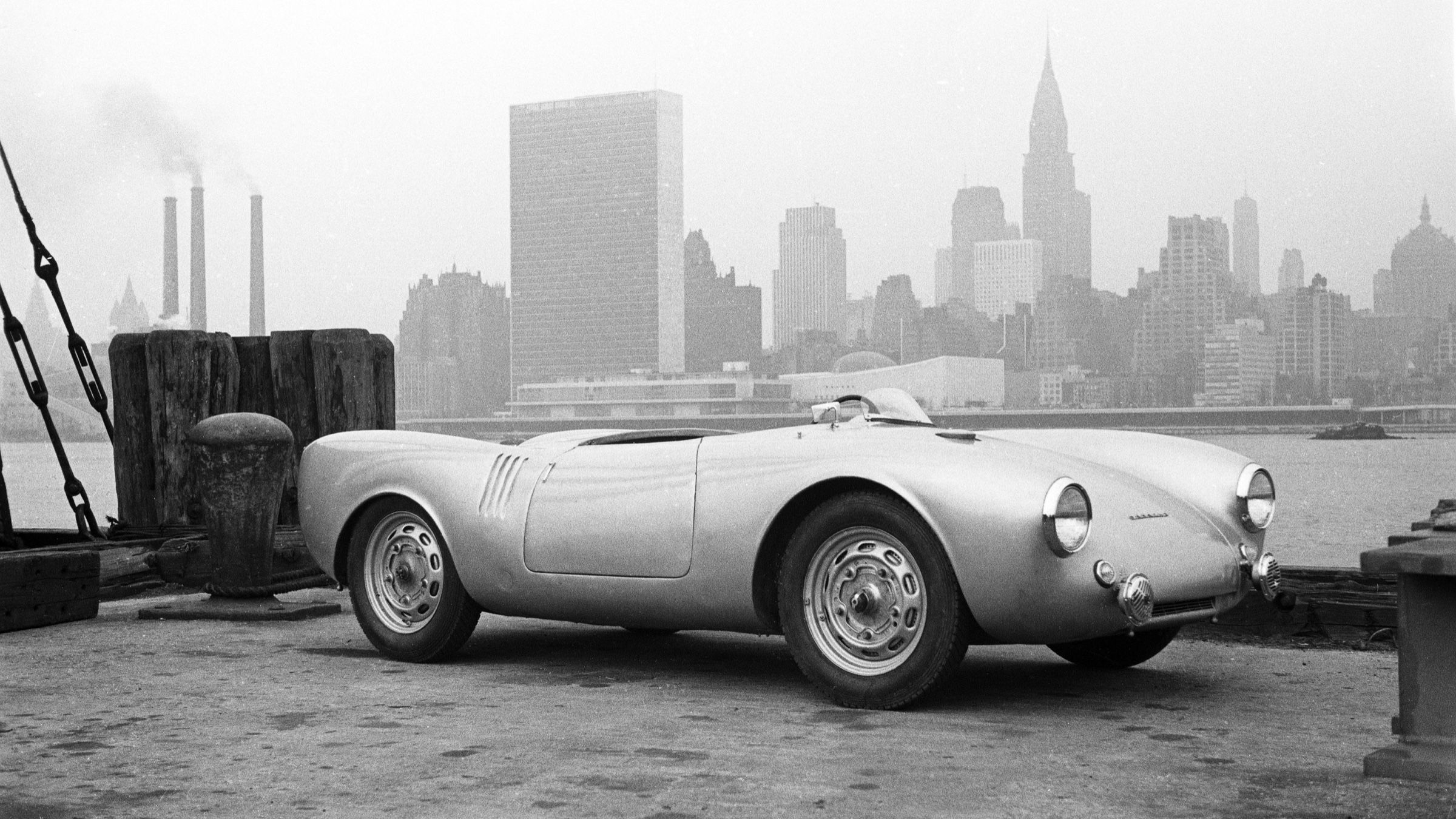
1953
550 Spyder
Porsche calls it the brand's first super sports car. Photographed on the Queens pier in 1953, the spot Porsche chose for the Mission S premiere.
1964
904 Carrera GTS
The first Porsche with a plastic body.
1996 to 1998
911 GT1 Strassenversion
A road car built so the GT1 racer could compete. Despite the 911 name, its engine sits in the middle. The Mission S takes its flat front and car-in-car rear from the GT1.
2003 to 2006
Carrera GT
Lapped the Nordschleife in 7:33 in 2004. A limited run, like every mid-engined Porsche flagship until now.
2013 to 2015
918 Spyder
Lapped the Nordschleife in 6:57 in 2013. The last of the 918 cars left Zuffenhausen on 19 June 2015.
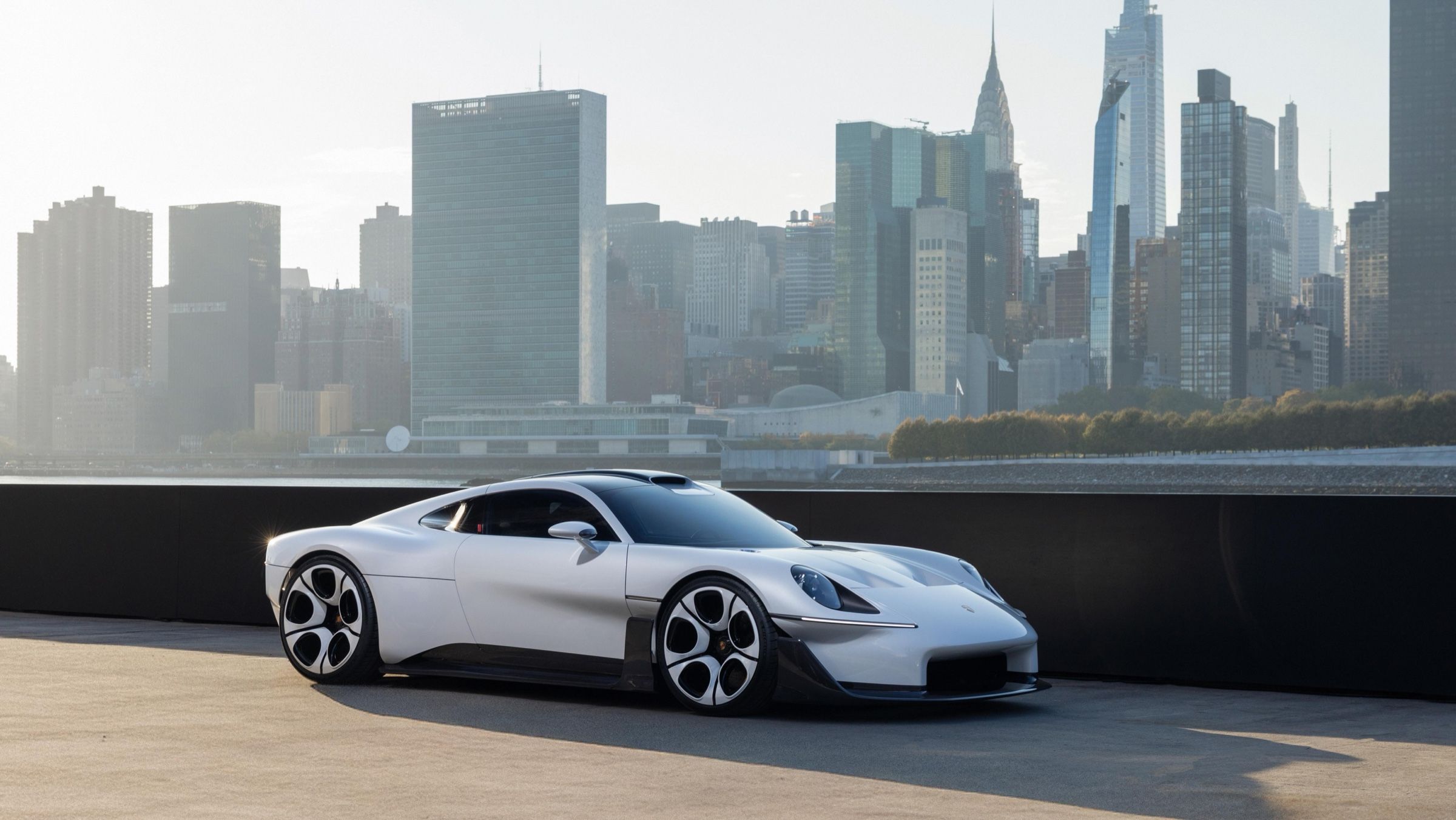
Shown 2026
Mission S
The first mid-engined Porsche flagship intended to stay in the range rather than sell out a limited run.
Notes on the numbers
- 550 Spyder: Porsche's history page dates it to 1953; the Porsche Museum entry gives 1954 for the production car. Porsche sources give production of 89 or 90 cars.
- 911 GT1 road car: Porsche's 2025 story gives two prototypes in 1996, about 20 cars in 1997 and one in 1998; another Porsche document says 21.
- 959: left out of the table on purpose. Its twin-turbo flat-six sits at the rear (292 built, 1987 to 1988). The Mission S borrows only its roofline.
- 918 Spyder: some Porsche pages date its launch to 2013, others to 2014; production ended in June 2015.
Keep reading
- Porsche Mission S overviewWhat the car is, why Queens, and the quick answers.
- Specs: confirmed vs reportedEvery stated fact, and every rumor with its source.
- The seven design references911, G-model, GT1, 959, 917, 928 and 550 Spyder.
- The interiorFive round dials, no centre screen, a phone holder.
- All official photosThe full Porsche media package, in high resolution.
- Mission S vs Mission XThe 2023 electric hypercar study against the 2026 car.
- Mission S timelineTeasers, the leak, the premiere and what came after.
Sources
- Porsche history: super sports cars, Porsche Newsroom, 2016-01-02. 550 Spyder, 904, Carrera GT.
- Porsche 550 Spyder (Porsche Museum press kit), Porsche Newsroom, undated. 550 Spyder production details.
- What is the Porsche 911 GT1 Strassenversion?, Porsche, 2025-09-05. 911 GT1 Strassenversion.
- 25 years since the world premiere of the Carrera GT, Porsche Newsroom, 2025. Carrera GT production and Nordschleife time.
- Five of the greatest Porsche hypercars, Porsche, 2025-07-21. 918 Spyder powertrain, 959 engine.
- End of production for the 918 Spyder, Porsche Newsroom, 2015-06-19. End of 918 Spyder production.
- Porsche 959 Coupé (Porsche Museum press kit), Porsche Newsroom, undated. 959 build numbers.
- Porsche Mission S: the essence of the sports car reinterpreted, Porsche Newsroom, 2026-10-15. Mission S and the Queens pier.
- Porsche Mission S supercar reveals brand's future look and plan to challenge Ferrari, Auto Express (Phil McNamara), 2026-10-15. Mission S powertrain options.
Spotted an error? Tell us and it goes on the corrections log.