Design
Seven Porsches inside one
Porsche did not hide its sources. The Mission S release names a specific historic car behind almost every major line. Here they are, one at a time, with the photo that shows each one.
By Mario Bailey Published Updated
The short answer
- Porsche says the Mission S design draws on seven earlier Porsches: the 911, G-model 911, GT1, 959, 917, 928 and 550 Spyder (with the 356 inside).
- The roofline runs under the rear wing like the 959; the flat front and car-in-car rear come from the GT1.
- The wheels reinterpret the 928 "dial" design; the cooling layout recalls the 917 radiator fan.
- Show-car colours: Firn White Metallic, Light Red Metallic, Black Chrome outside and Special Black inside.
Checked against Porsche's own releases on .
The design language in one paragraph
Porsche's design chief Tobias Sühlmann frames the car with three words: authentic, consequent and timeless. In practice that means what Porsche calls "floating volumes", surfaces that seem to hover over the body, set on a very low, very wide stance. A single wraparound main line joins the front and rear lamps. Above it, the body is muscular. Below it, the structure is left visible on purpose to show off the lightweight construction. The engine sits behind the cabin, which is what lets the roof run down in Porsche's familiar "flyline".
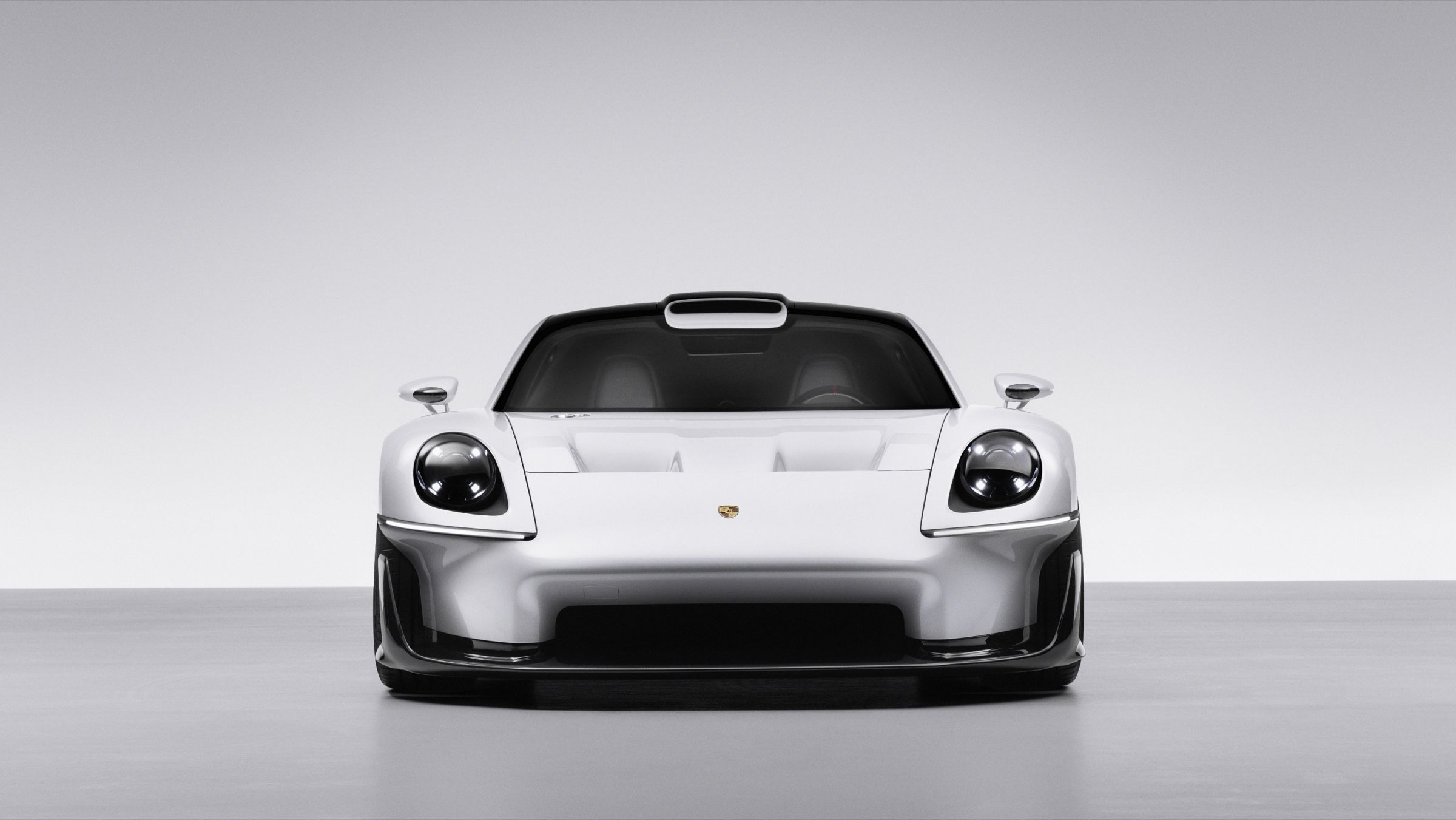
Reference 01
911
Round headlights and the prominent "torpedo" fenders
The fenders rise above the bonnet line the way a 911's do, which is why the car reads as a Porsche from the front before you see the badge. Porsche says the fenders also make the side profile "more present".
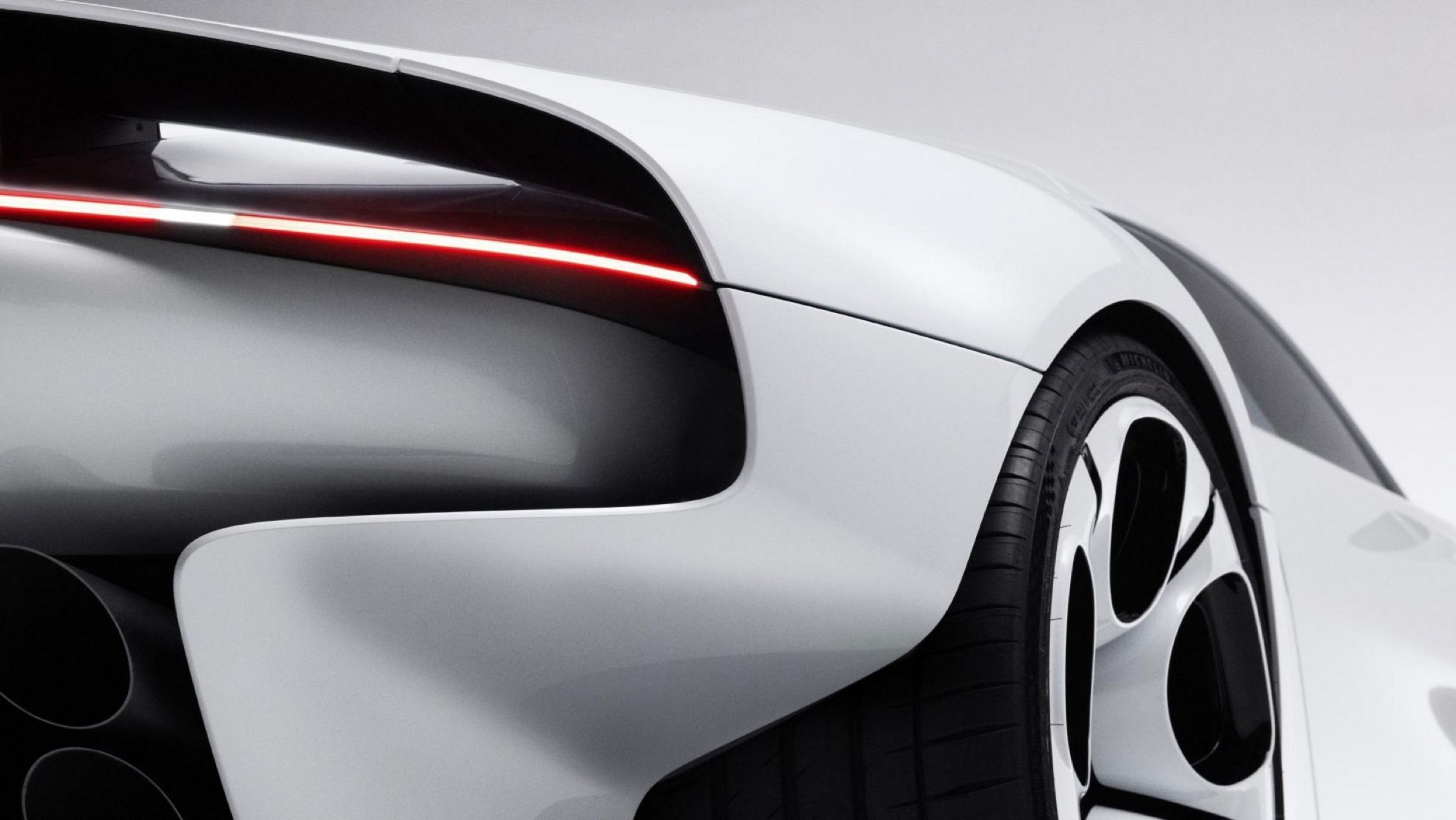
Reference 02
G-model
Shut lines that run into the light graphics
The G-model is the 911 generation built from the mid-1970s to the end of the 1980s. Here the panel gaps are not hidden; they are drawn on purpose so that they flow into the lamps.
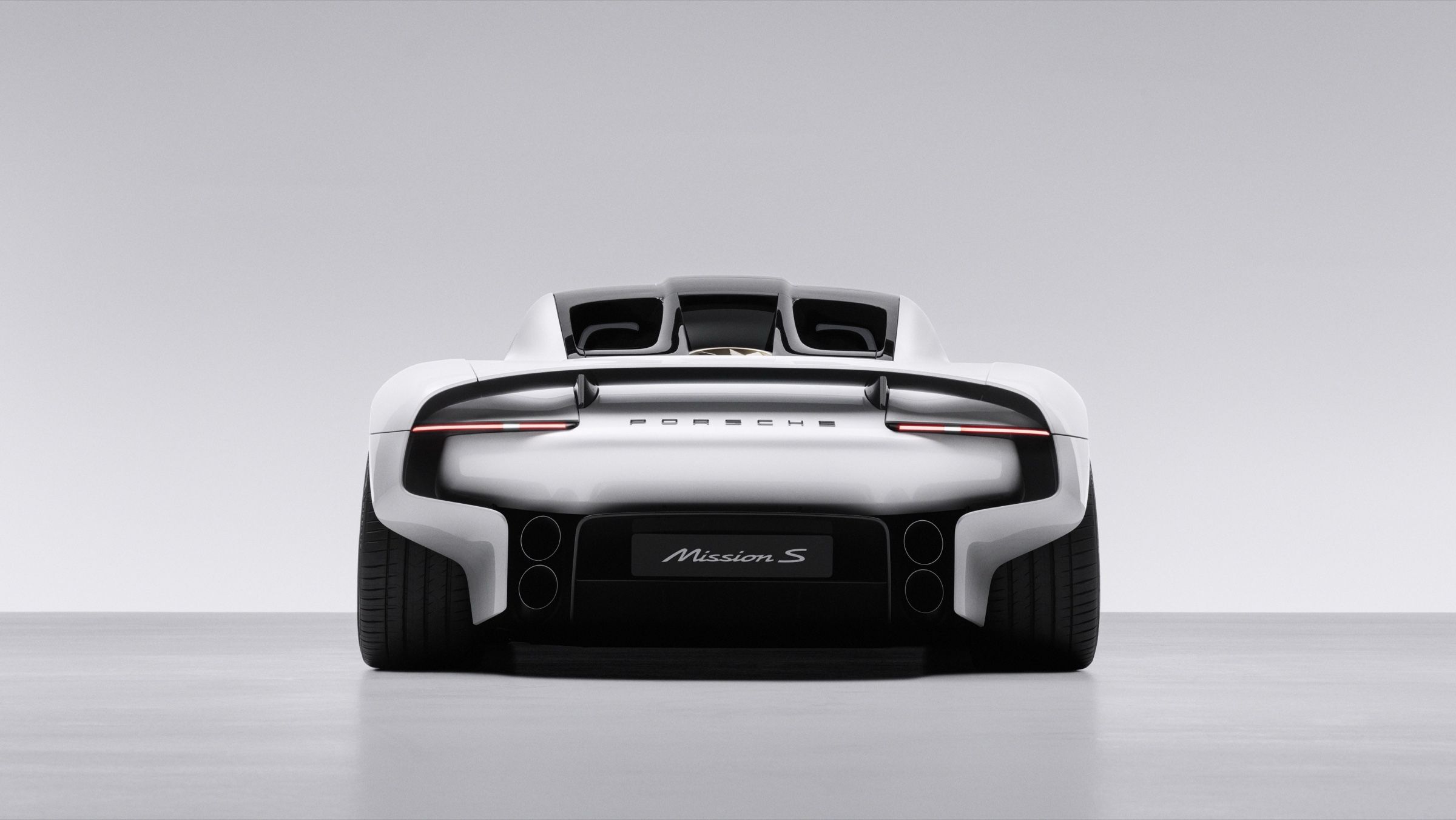
Reference 03
GT1
The flat front, and the "car-in-car" concept at the rear
The 911 GT1 was Porsche's 1990s Le Mans racer. Its low, flat nose returns here, and so does the idea of a rear section that reads as a second body set inside the outer one.
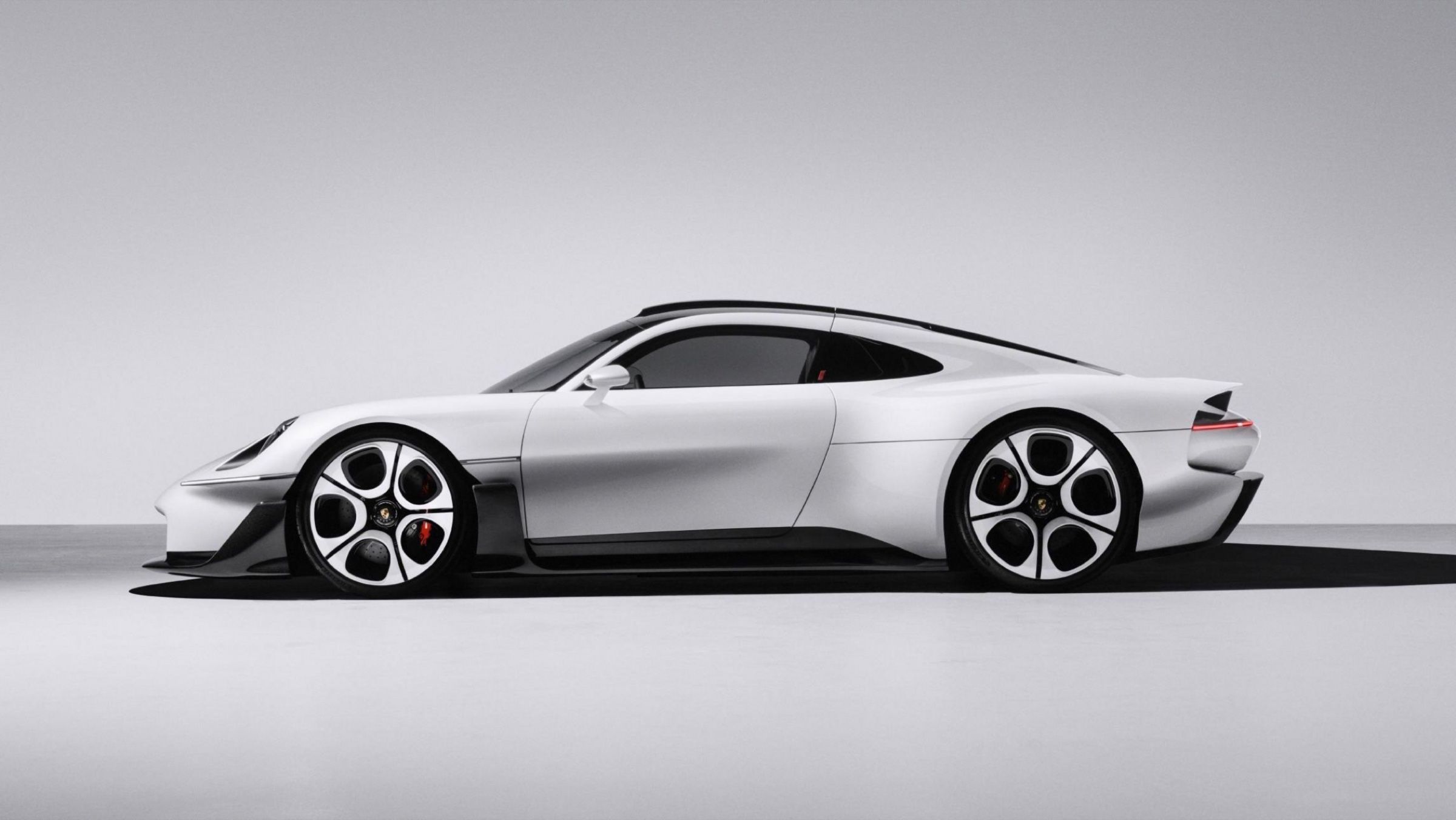
Reference 04
959
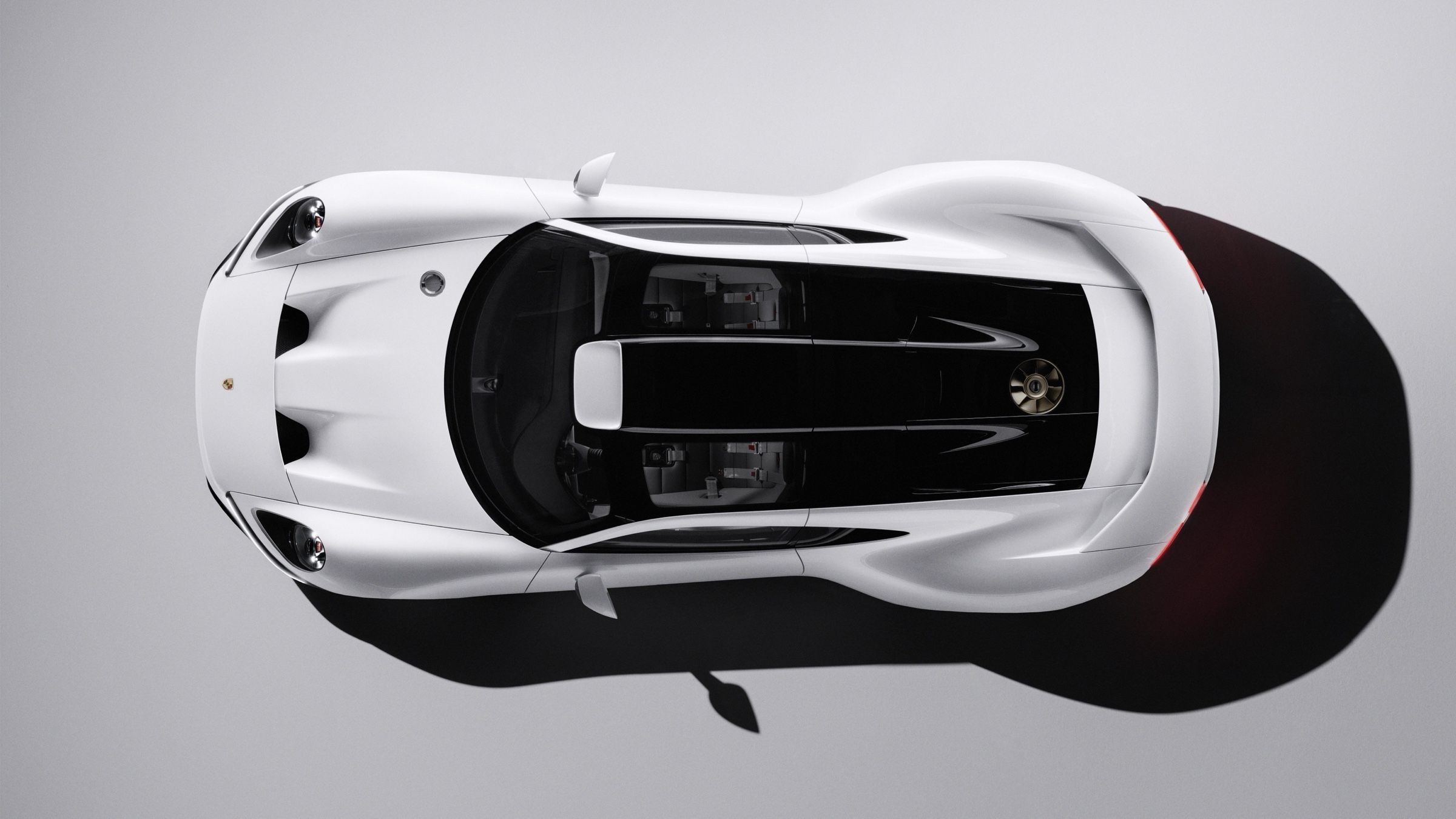
The roofline that runs beneath the rear wing
On the 959 the roof flows down and passes under the wing. On the Mission S that line continues all the way to the tail, which is the single most distinctive thing about its profile.
Reference 05
917
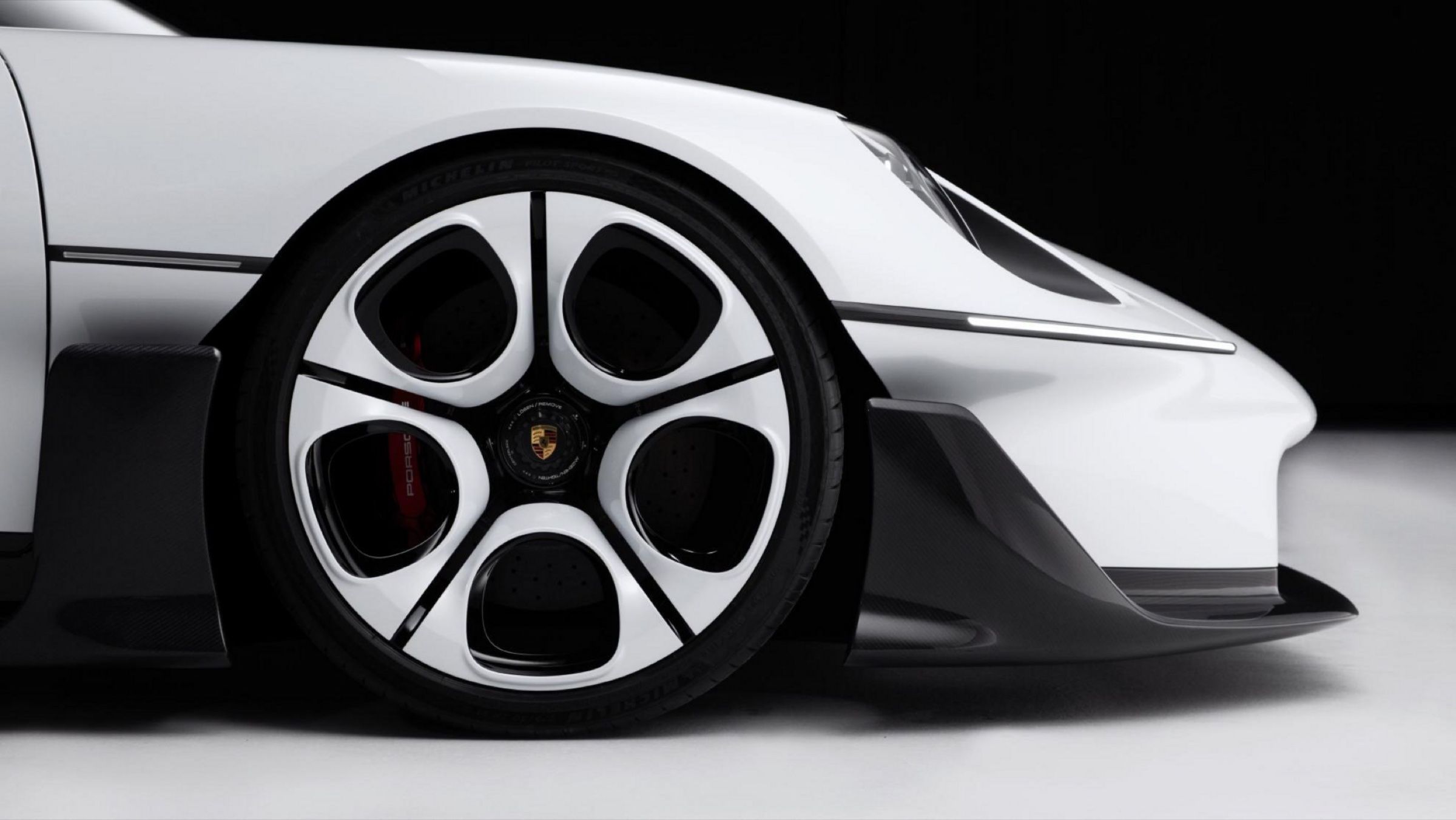
The cooling solution, reminiscent of the 917's radiator fan
The 917 is the racer that won Porsche its first overall Le Mans victory, and its flat engine was cooled by a large horizontal fan. Porsche quotes that fan in the Mission S cooling layout; it is best seen from above.
Reference 06
928
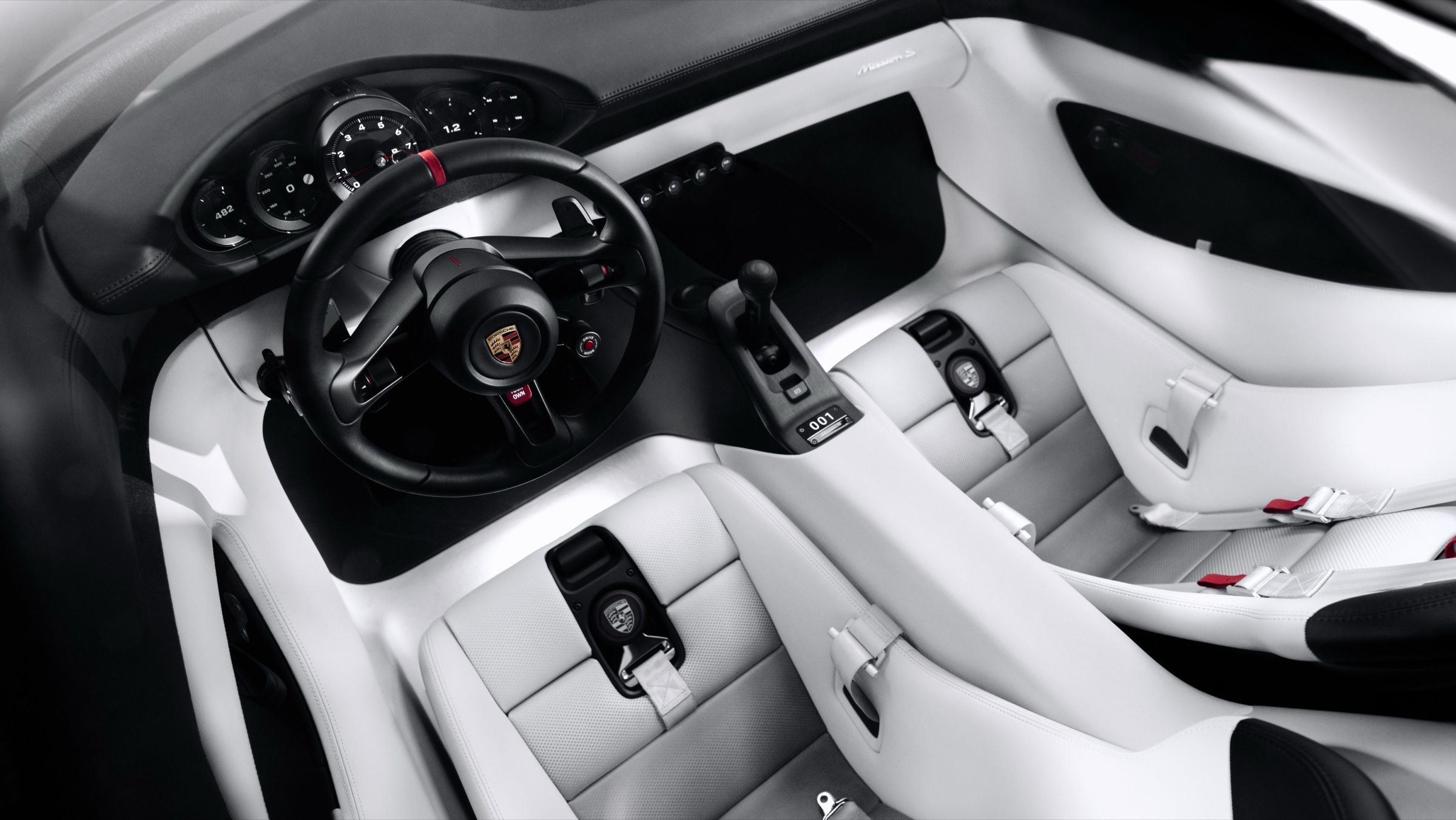
The wheels, redeveloped from the 928 "dial design"
The 928's phone-dial wheels are one of the most recognisable Porsche wheel designs. The Mission S keeps the round openings and re-engineers them for low weight.
Reference 07
550 Spyder and 356
The interior architecture
Two lines run across the dashboard and doors to give the feeling of sitting "deep within the car", an idea Porsche credits to its earliest sports cars. The 550 Spyder also supplied the premiere location.
The colours
The show car wears colours developed for it, drawn from the white, grey and red of Porsche's racing cars. Porsche names them Firn White Metallic, Light Red Metallic and Black Chrome outside, with Special Black inside. This site's own palette is taken from them.
- Firn White Metallic
- Light Red Metallic
- Black Chrome
- Special Black
On-screen approximations, not Porsche paint codes.
The design drawings
01 of 07
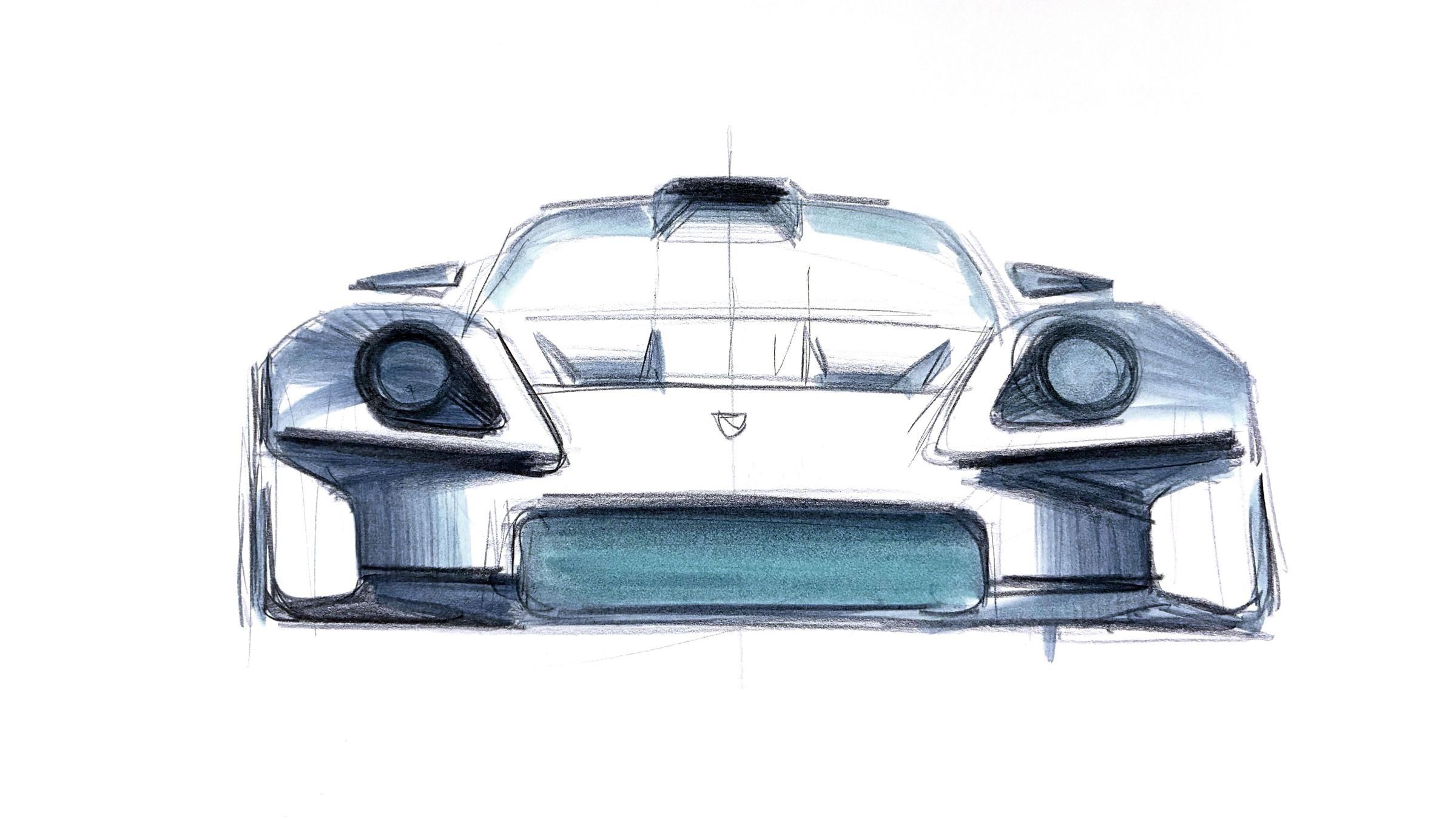
Front-view design sketch with round headlights and a wide flat nosePhoto: Porsche AG 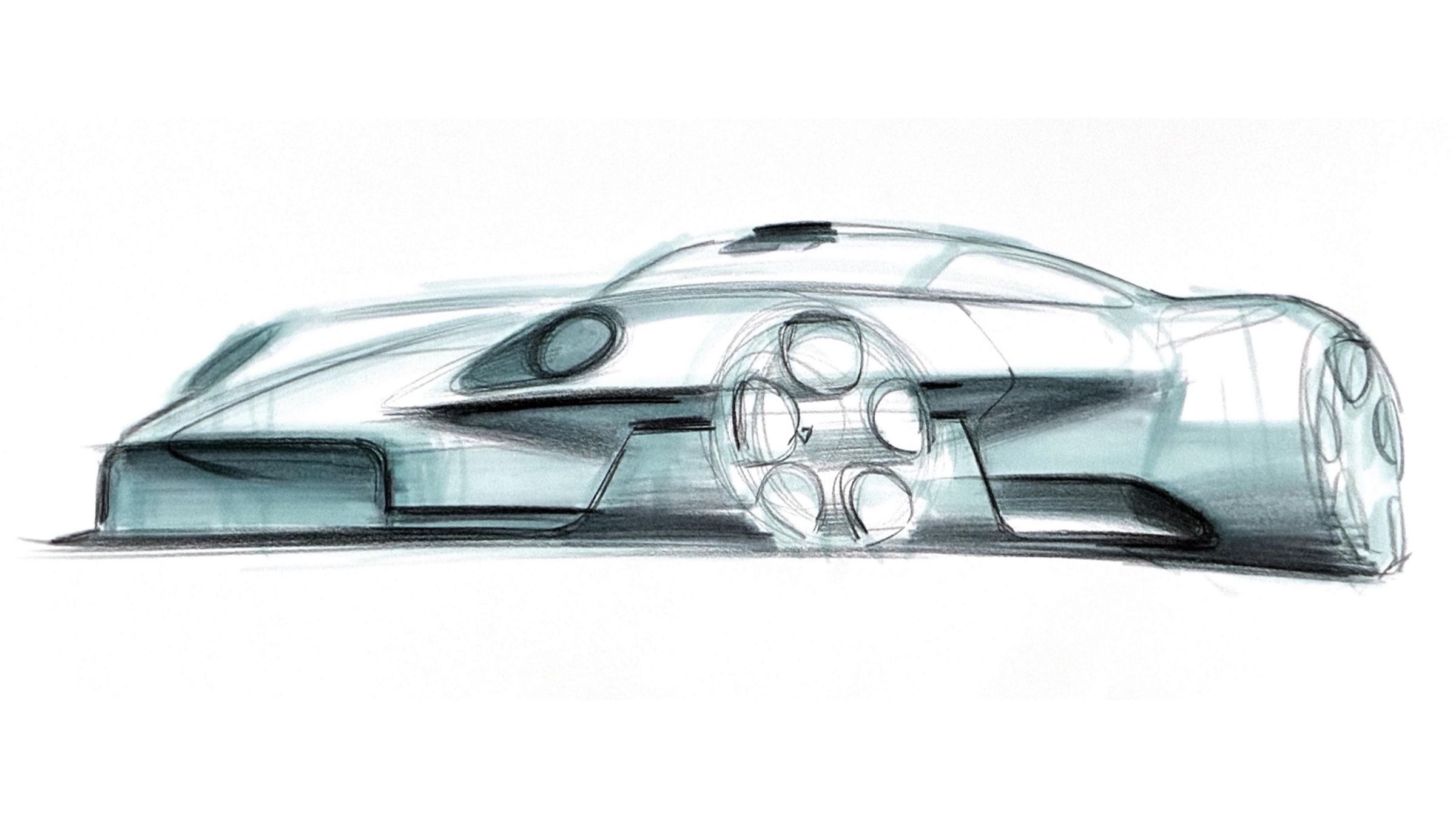
Side-view design sketch showing the low mid-engined profilePhoto: Porsche AG 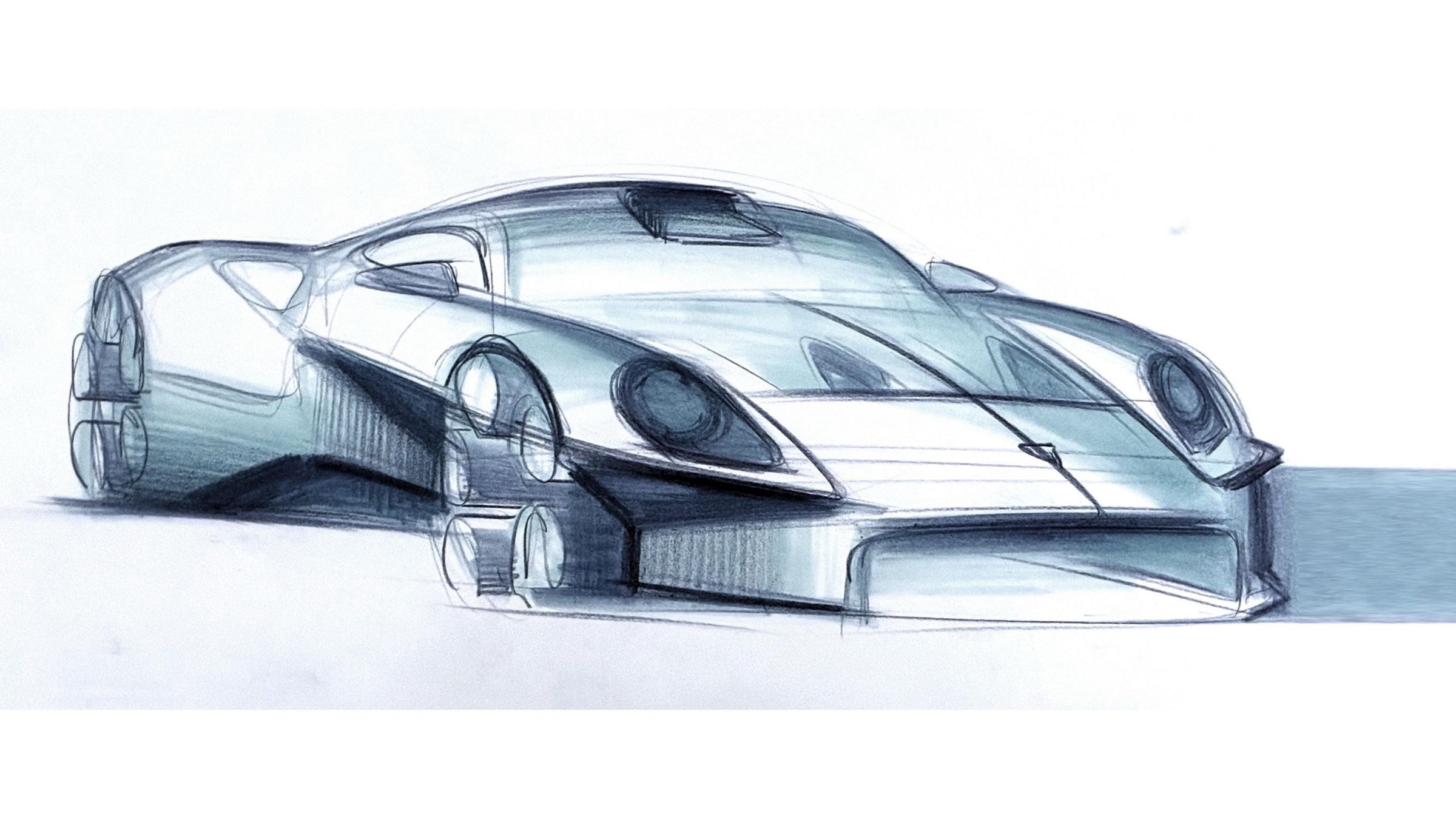
Front three-quarter design sketch with exaggerated fendersPhoto: Porsche AG 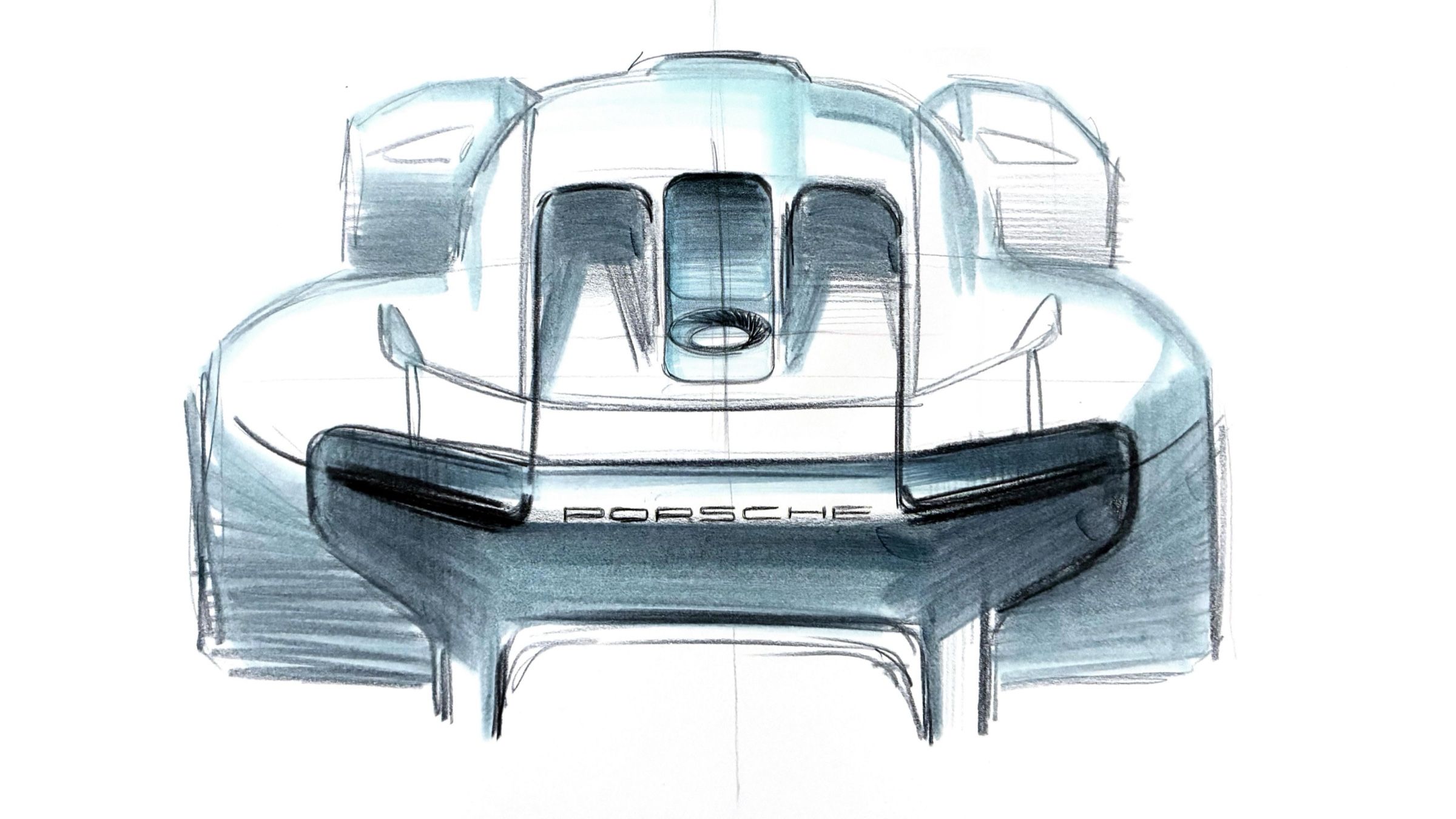
Rear design sketch with the wing and the roof air intakesPhoto: Porsche AG 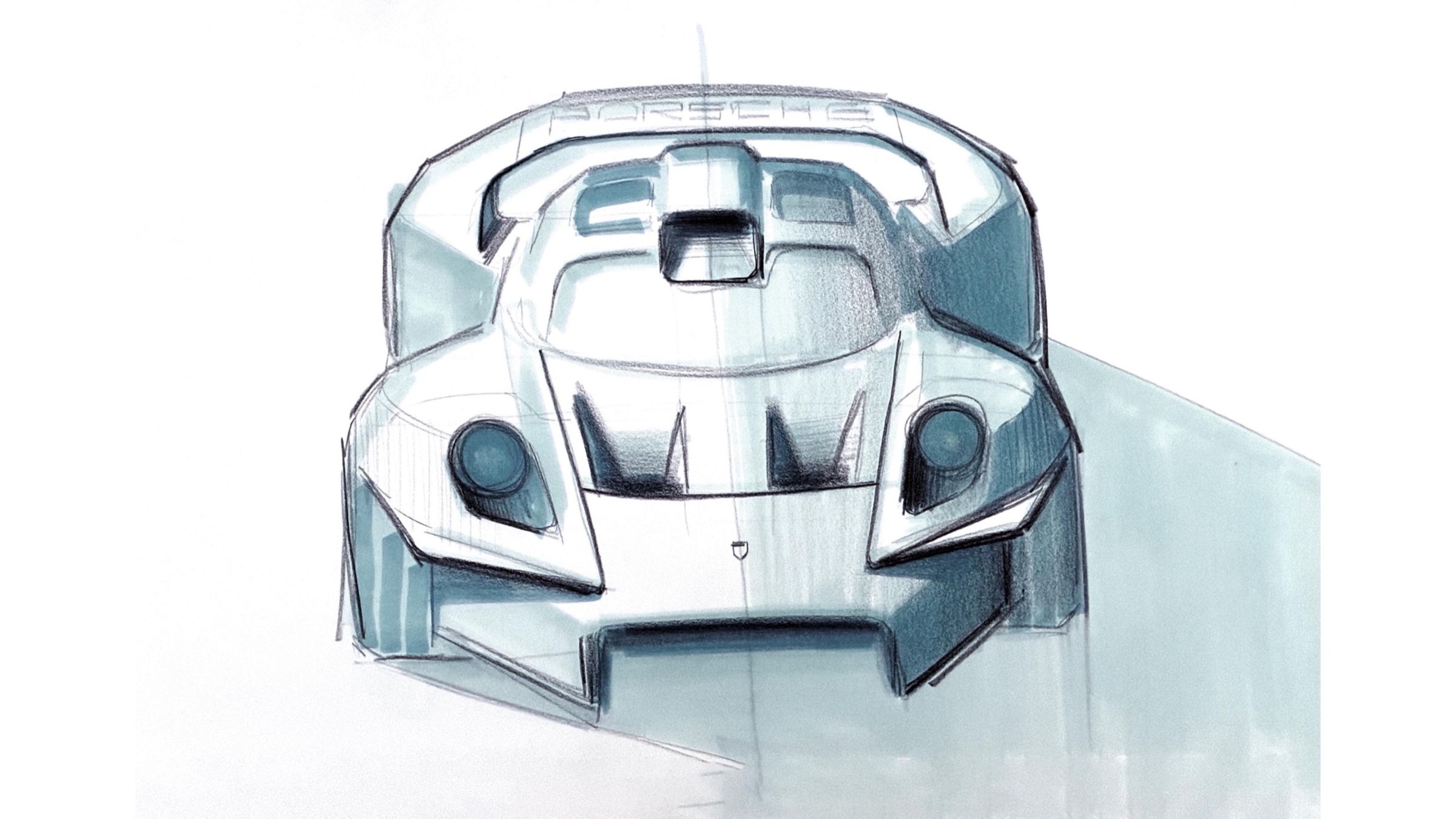
Overhead rear design sketch showing the engine cover and intakesPhoto: Porsche AG 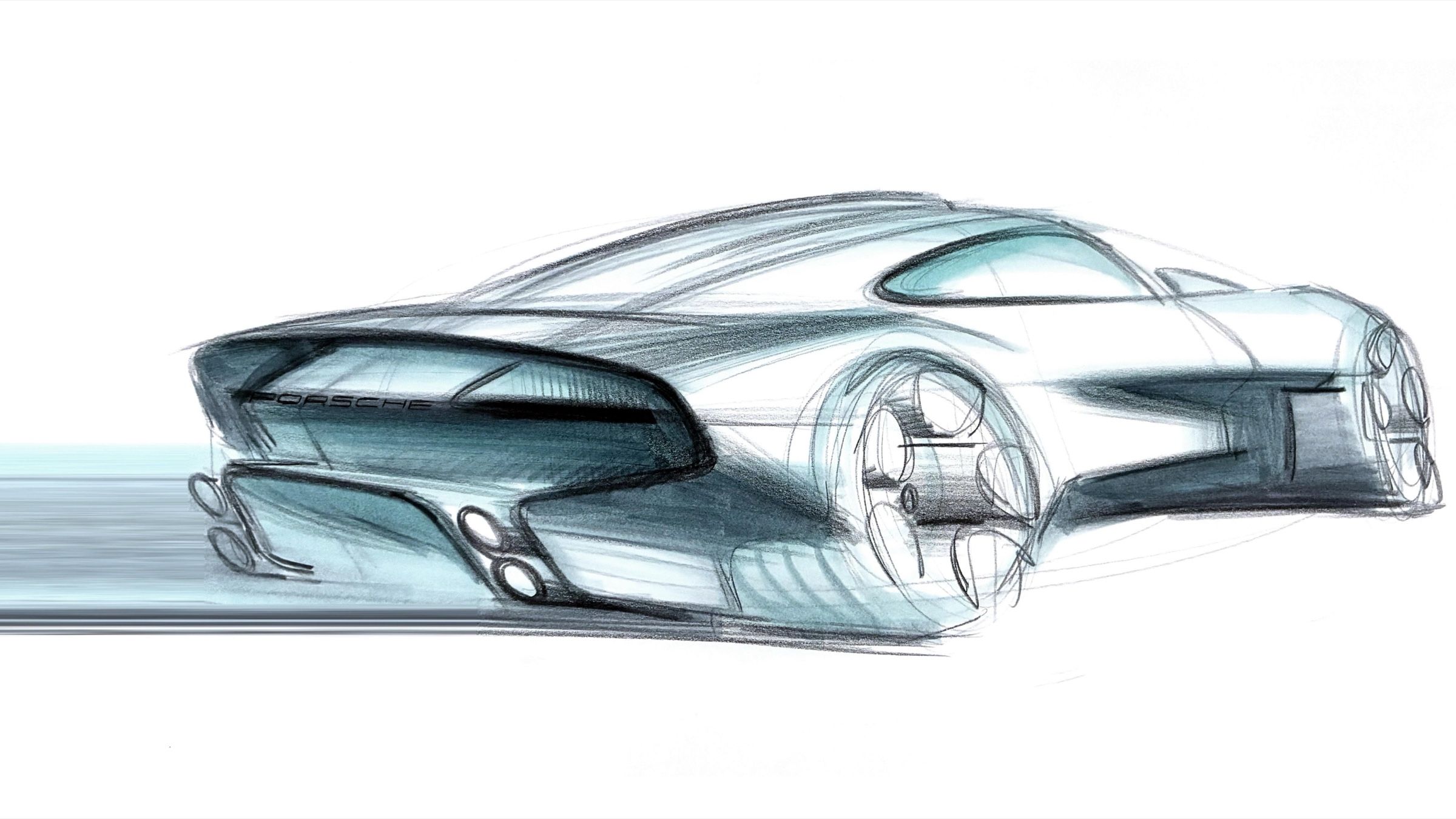
Rear three-quarter design sketch of the bodyPhoto: Porsche AG 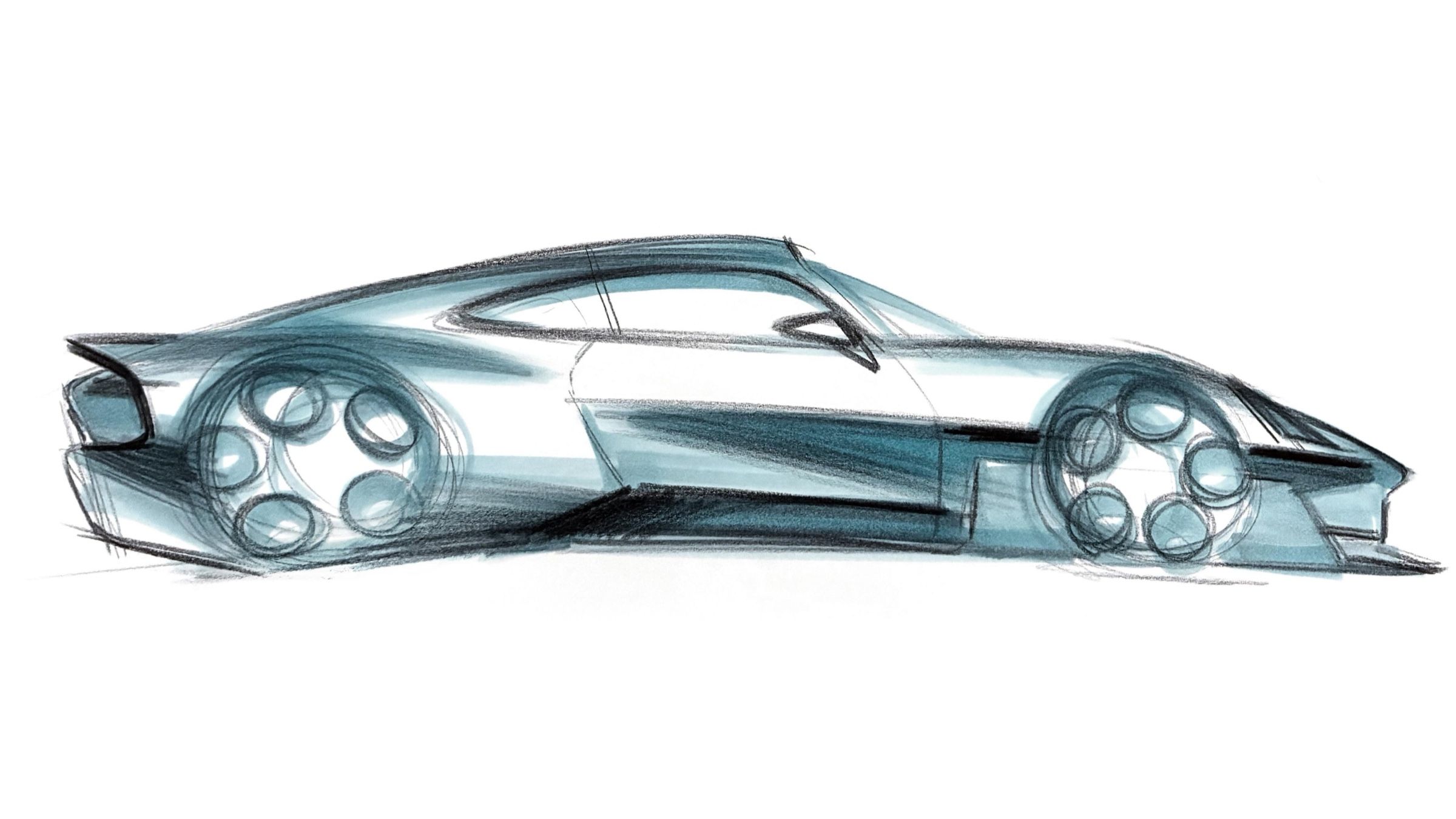
Side design sketch with the five-opening wheelPhoto: Porsche AG
Keep reading
- Porsche Mission S overviewWhat the car is, why Queens, and the quick answers.
- Specs: confirmed vs reportedEvery stated fact, and every rumor with its source.
- The interiorFive round dials, no centre screen, a phone holder.
- All official photosThe full Porsche media package, in high resolution.
- Mission S vs Mission XThe 2023 electric hypercar study against the 2026 car.
- Porsche's mid-engine supercars550 Spyder, 904, GT1, Carrera GT, 918 Spyder, Mission S.
- Mission S timelineTeasers, the leak, the premiere and what came after.
Sources
- Porsche Mission S: the essence of the sports car reinterpreted, Porsche Newsroom, 2026-10-15. Every design reference and quote on this page, and all images.
Spotted an error? Tell us and it goes on the corrections log.