Interior
An interior that hands the screen back to you
Most new cars add screens. The Mission S takes them out. Porsche calls the result a 'symbiosis of analogue and digital controls', and the photos show how far it went.
By Mario Bailey Published Updated
The short answer
- The Mission S interior has no permanent centre screen and no passenger screen; a retractable MagSafe holder takes your phone instead.
- There are five round instruments; the central rev counter has an analogue needle and moves closer to the driver in some modes.
- Controls are physical: push-pull switches, a key holder left of the wheel, and a reworked Sport Chrono element.
- The layout is based on the 550 Spyder and 356, with two lines across the dash and doors for a "deep within the car" feel.
Checked against Porsche's own releases on .
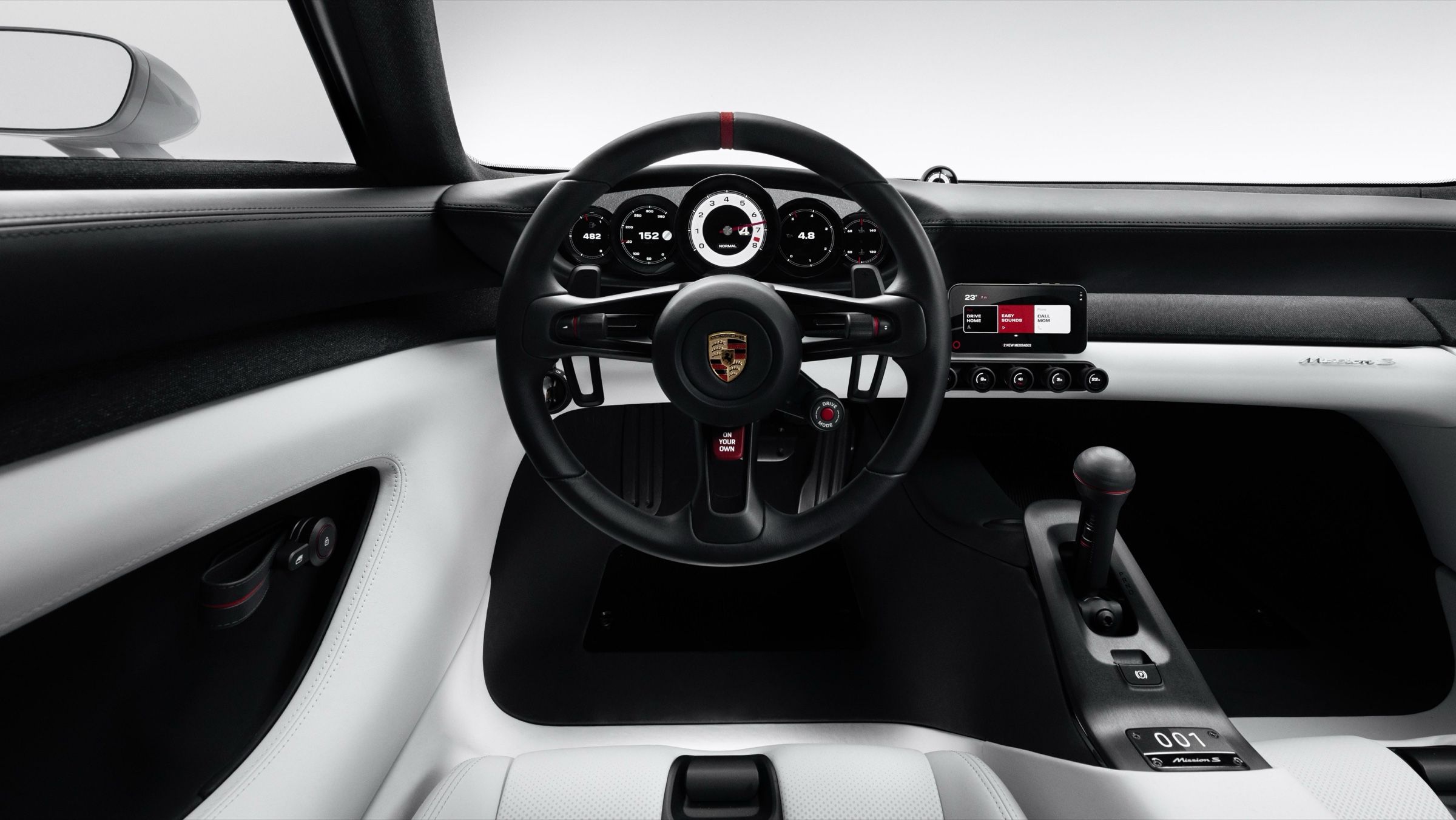
The idea: everything points at the driver
Porsche says the interior is "a deliberate return to the core values of sports car engineering". The layout is organised along what it calls the driver's axis: every control is aligned toward the person at the wheel, with a mix of physical and digital feedback.
The architecture borrows from the 550 Spyder and the 356. Two lines run through the dashboard and the doors, low enough to give the feeling of sitting deep inside the car, and they tie the cabin to the line that wraps around the outside of the body.
What is new, control by control
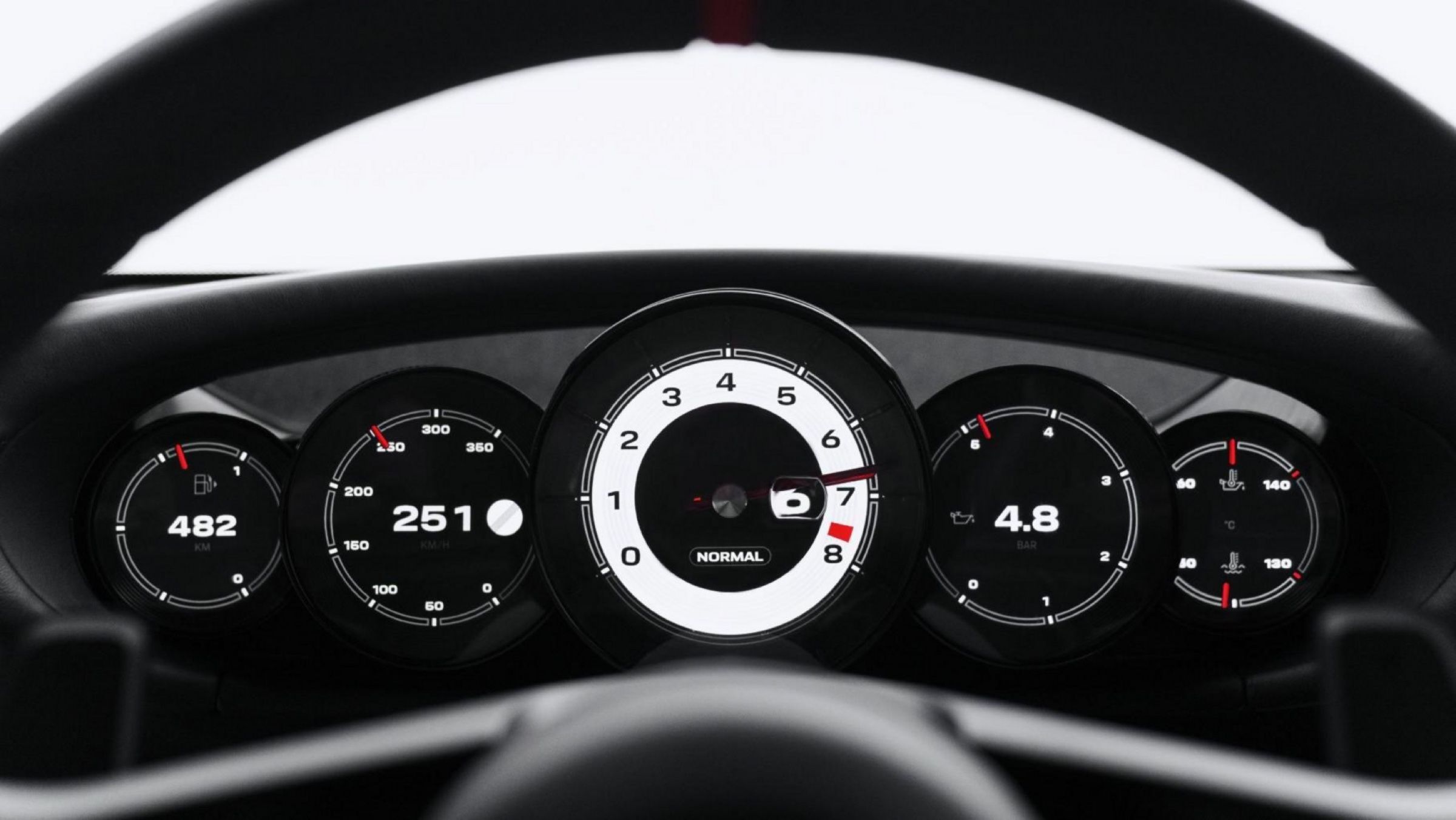
Five round instruments
Behind the steering wheel, in the Porsche tradition. The arrangement changes with the drive mode: the dials sit side by side in some modes and one behind another in others.
A rev counter that comes to you
The central rev counter has a real analogue needle with a display behind it. In some drive modes it moves physically closer to the driver.
No centre screen
There is no permanently installed centre display and no passenger display. A retractable holder compatible with MagSafe takes your own phone when you want navigation or information.
Push-pull controls
New dashboard controls you push and pull give direct access to comfort and driving functions, in place of menus.
Key on the left
A holder for a specially designed key sits to the left of the steering wheel, where Porsche has put the ignition for decades, a habit inherited from Le Mans starts.
A reworked Sport Chrono
The Sport Chrono element returns, mixing an analogue look with digital precision.
Seats with the buckle in the middle
The seatbelt buckle is integrated into the centre panel and the electric seat controls have moved, which Porsche describes as motorsport DNA meeting comfort.
Your phone is the screen
The phone holder is the boldest call in the cabin. Instead of a fixed infotainment display, your own smartphone becomes the navigation or information screen when you want one, and goes away when you do not. A streamlined My Porsche App handles the car's functions, and lets you pick historically inspired digital faces for the round instruments.
It is a show car, so whether a production version keeps this approach is open. As a statement of intent, it is clear: fewer surfaces to look at, more attention on the road.
Interior photos and sketches
01 of 07
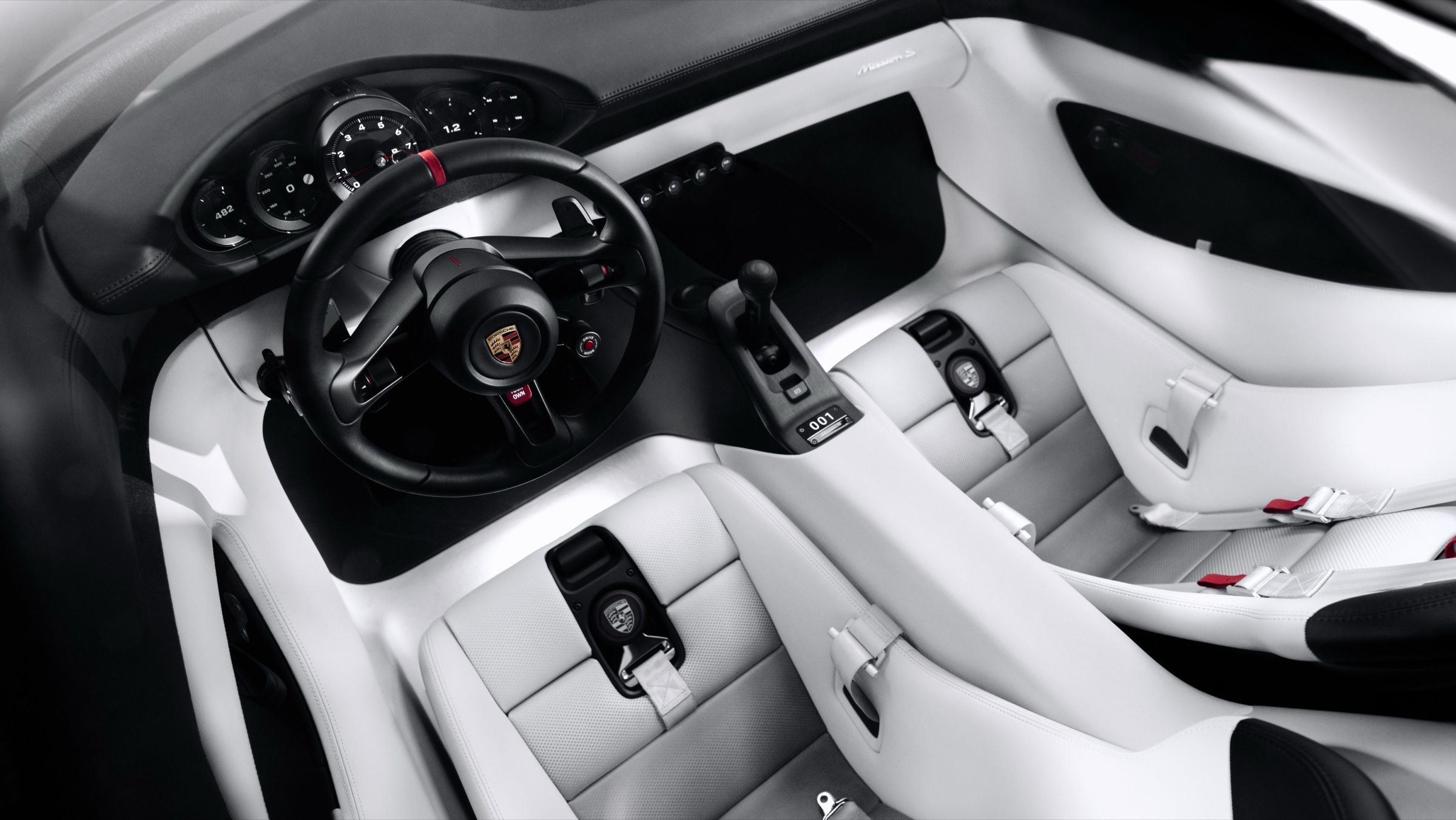
The cabin from above: black dashboard, white seats and door panels, and the centre consolePhoto: Porsche AG 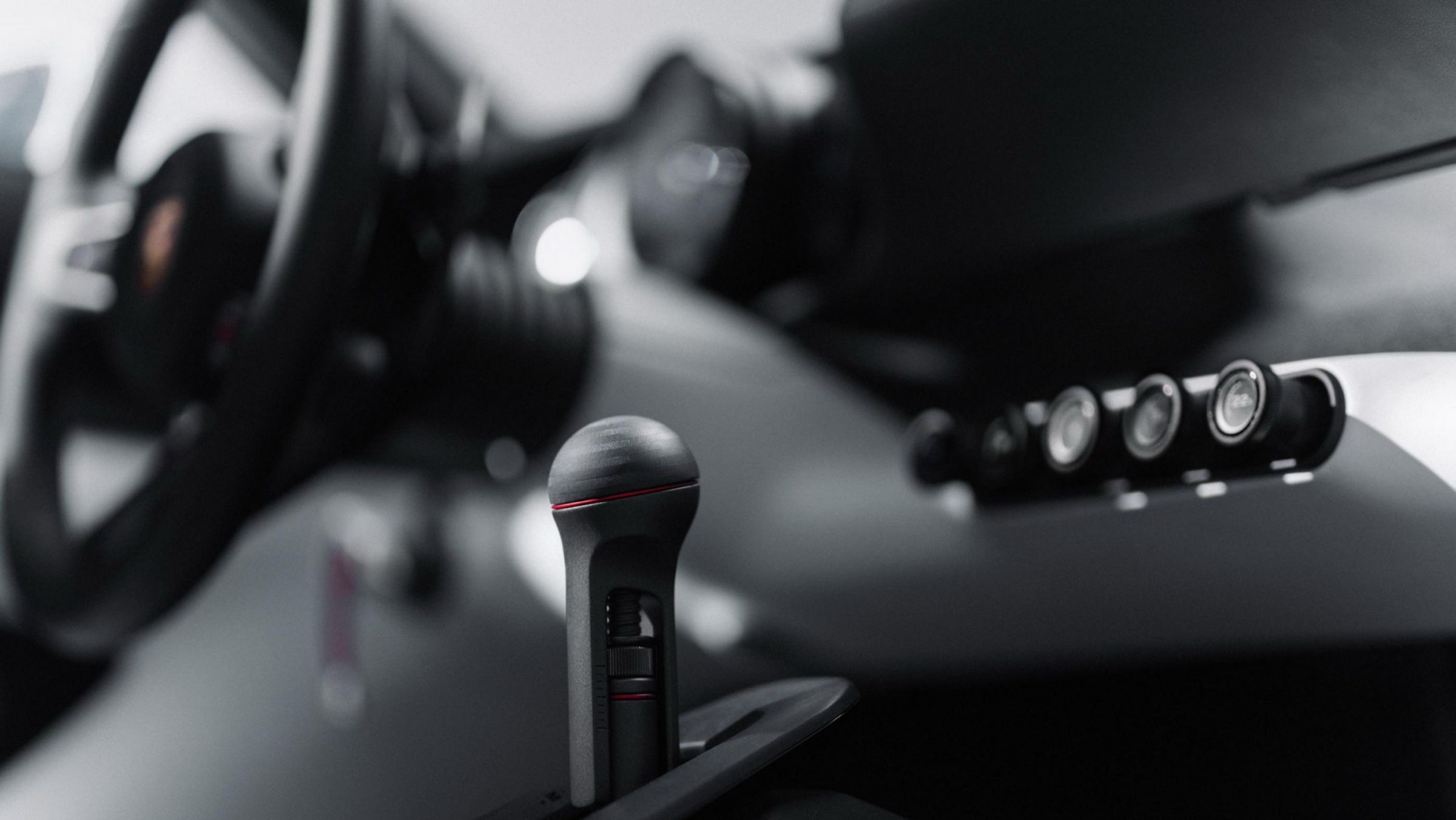
Close-up of the gear lever and a row of round controls in soft focusPhoto: Porsche AG 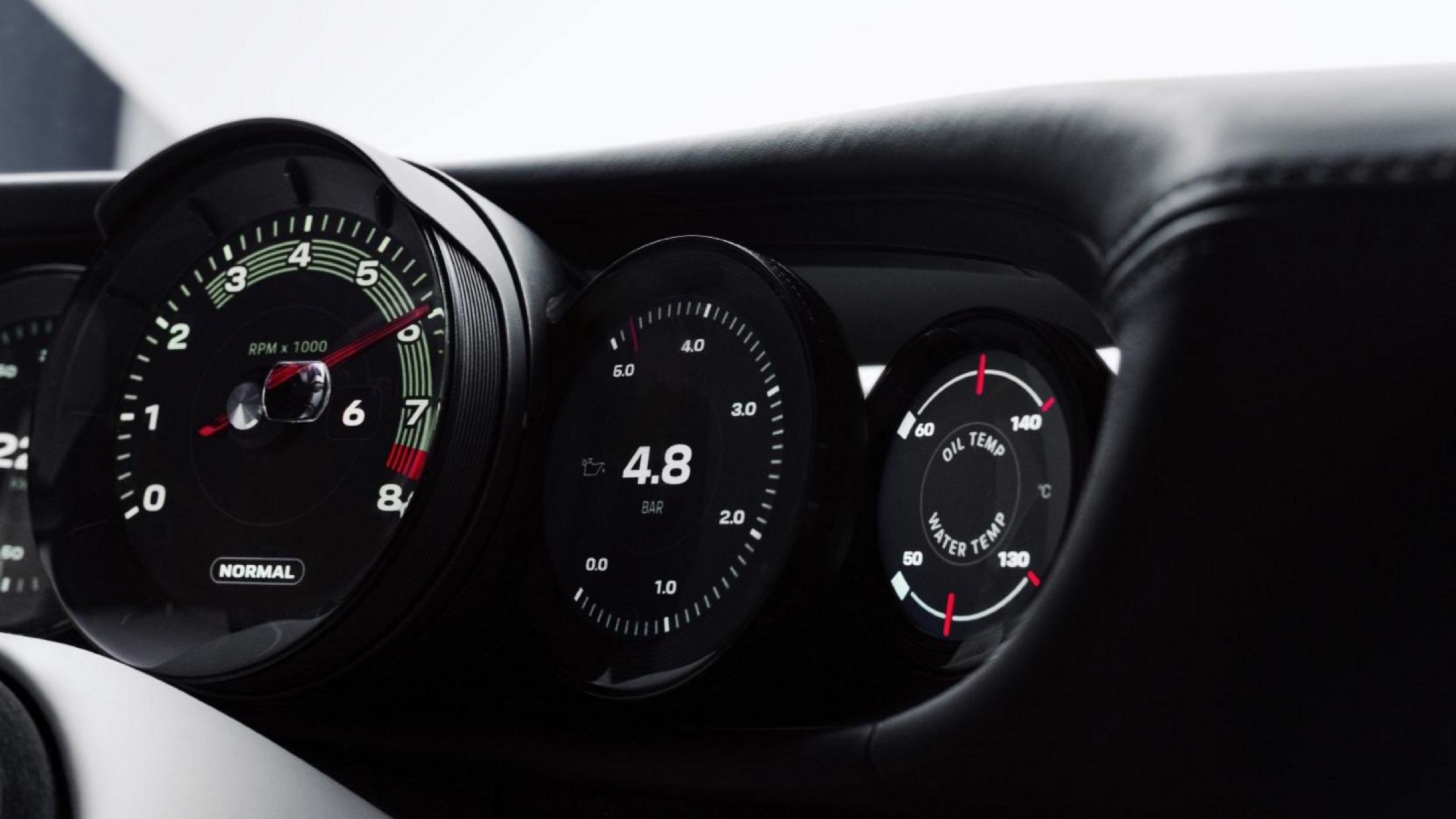
Close-up of the analogue rev counter needle and the gauges beside itPhoto: Porsche AG 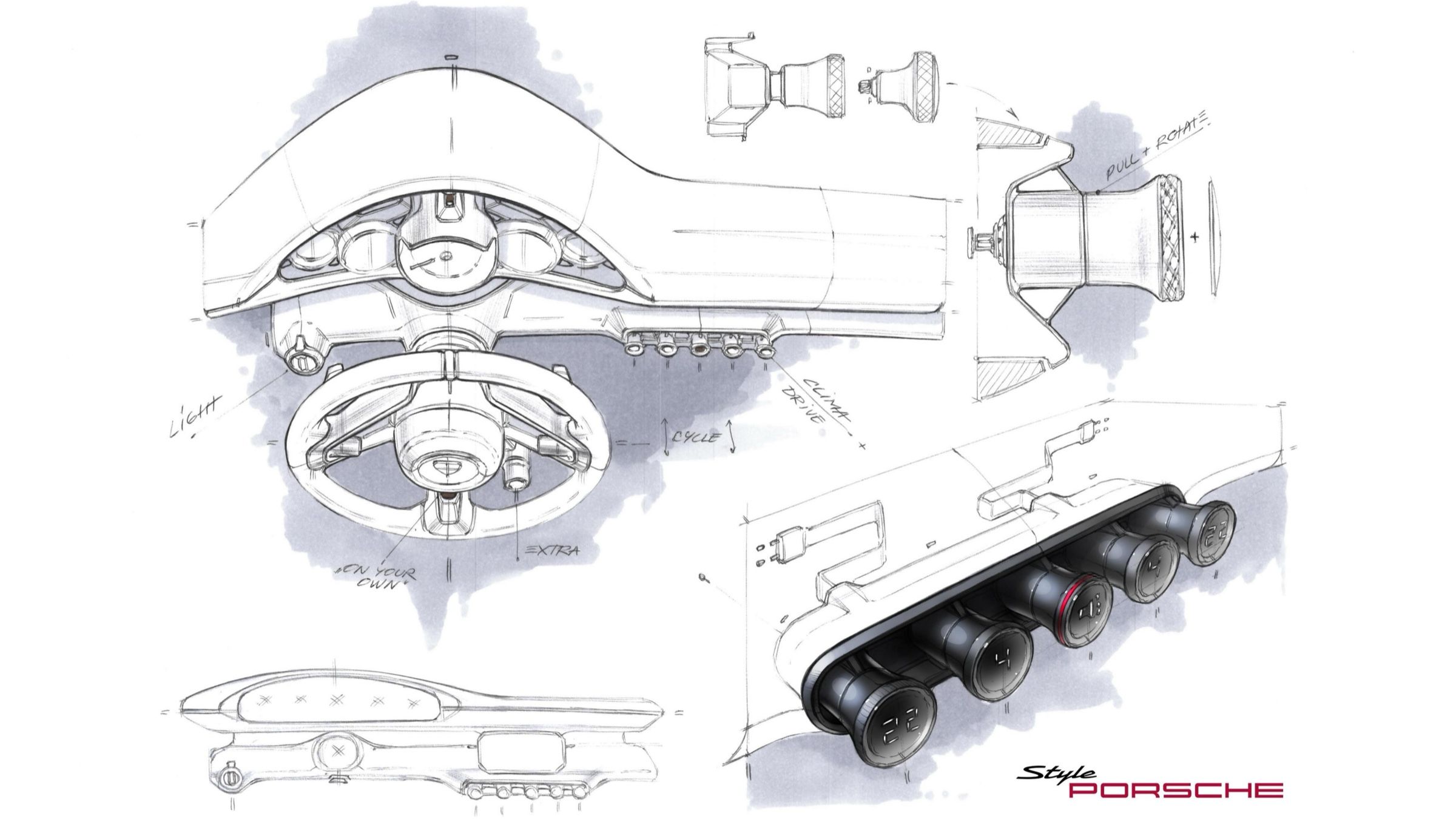
Interior sketch sheet with the steering wheel and a row of round controlsPhoto: Porsche AG 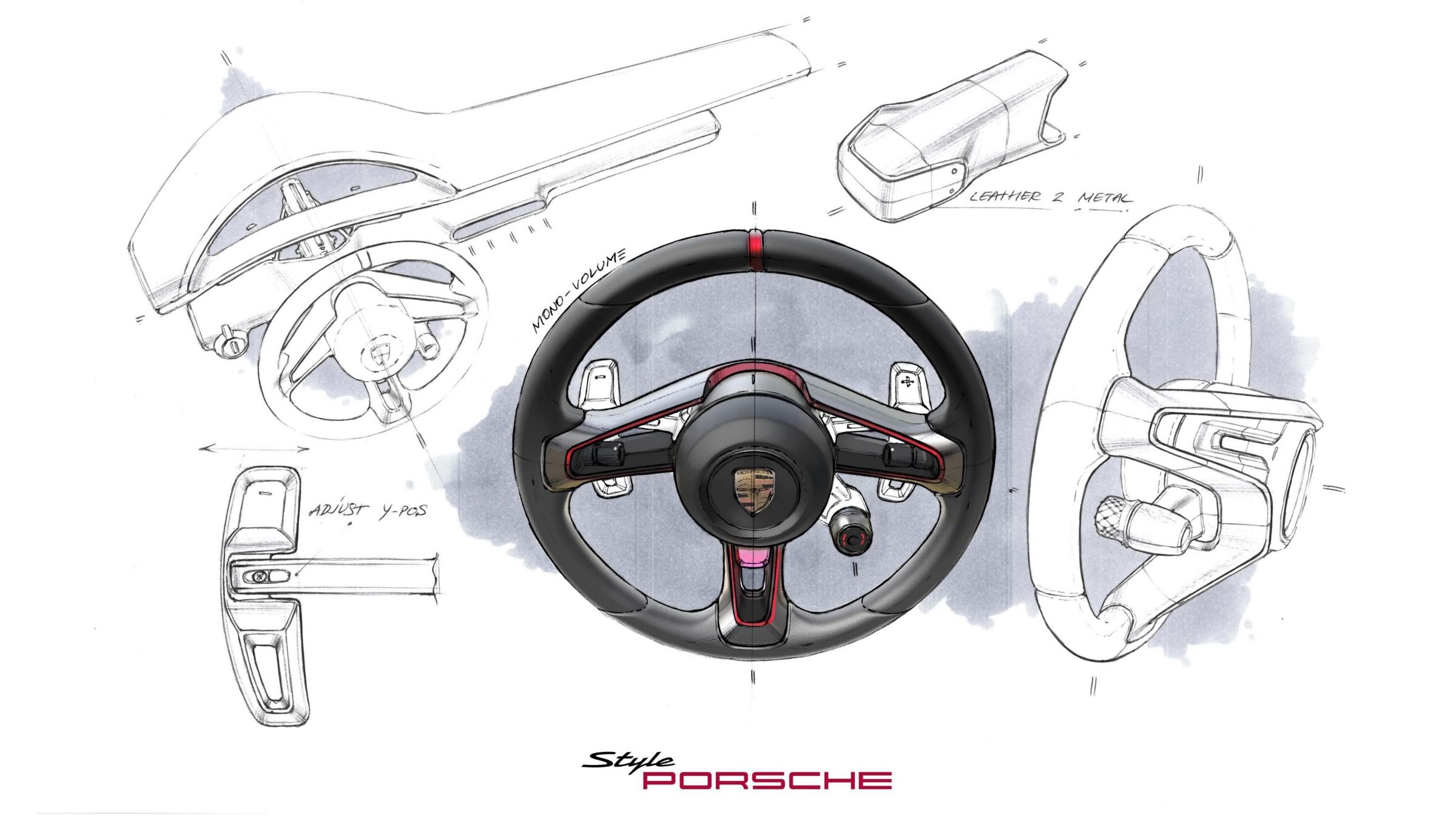
Interior sketch sheet centred on the steering wheelPhoto: Porsche AG 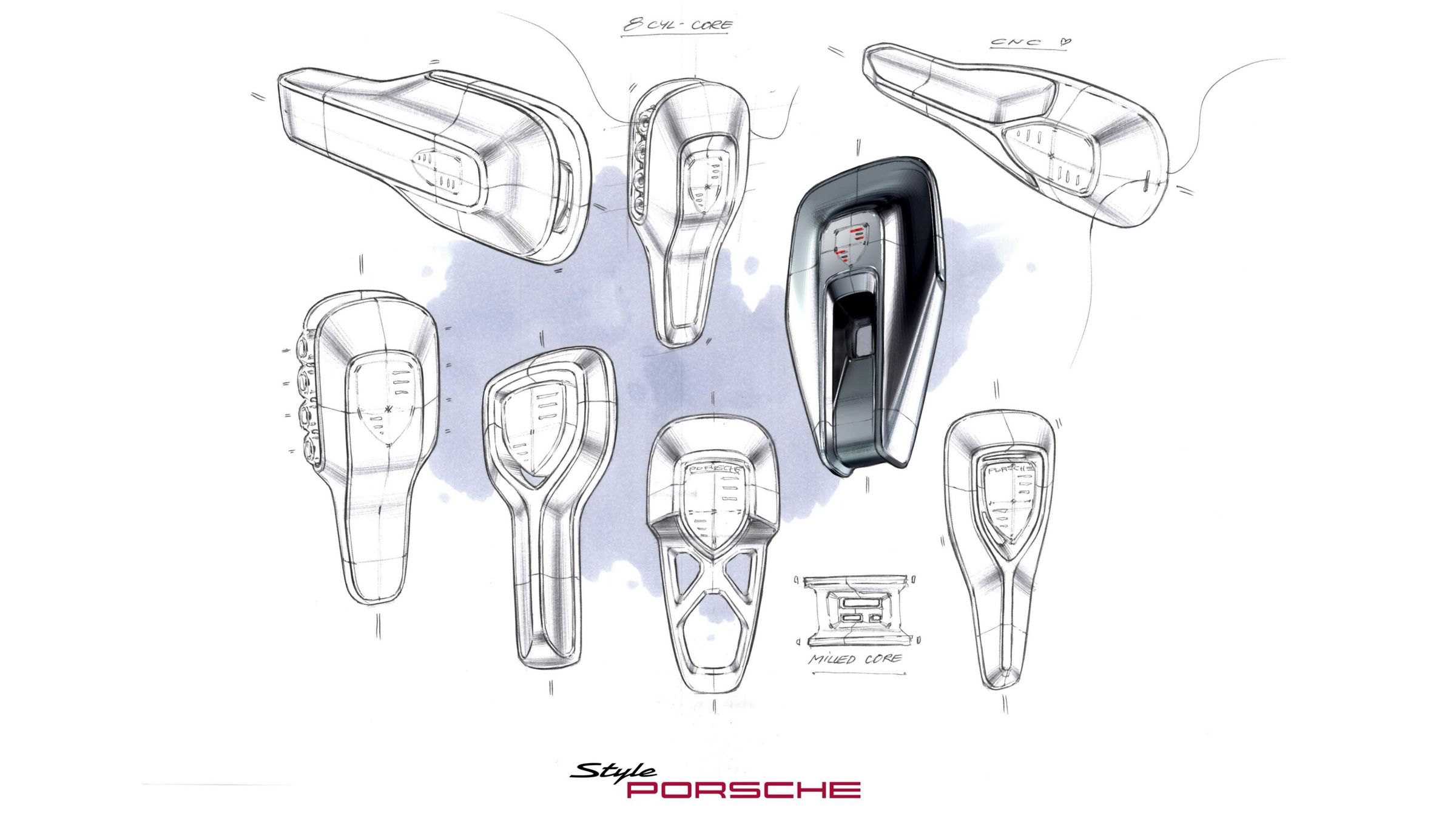
Sketch sheet of key and switch shapesPhoto: Porsche AG 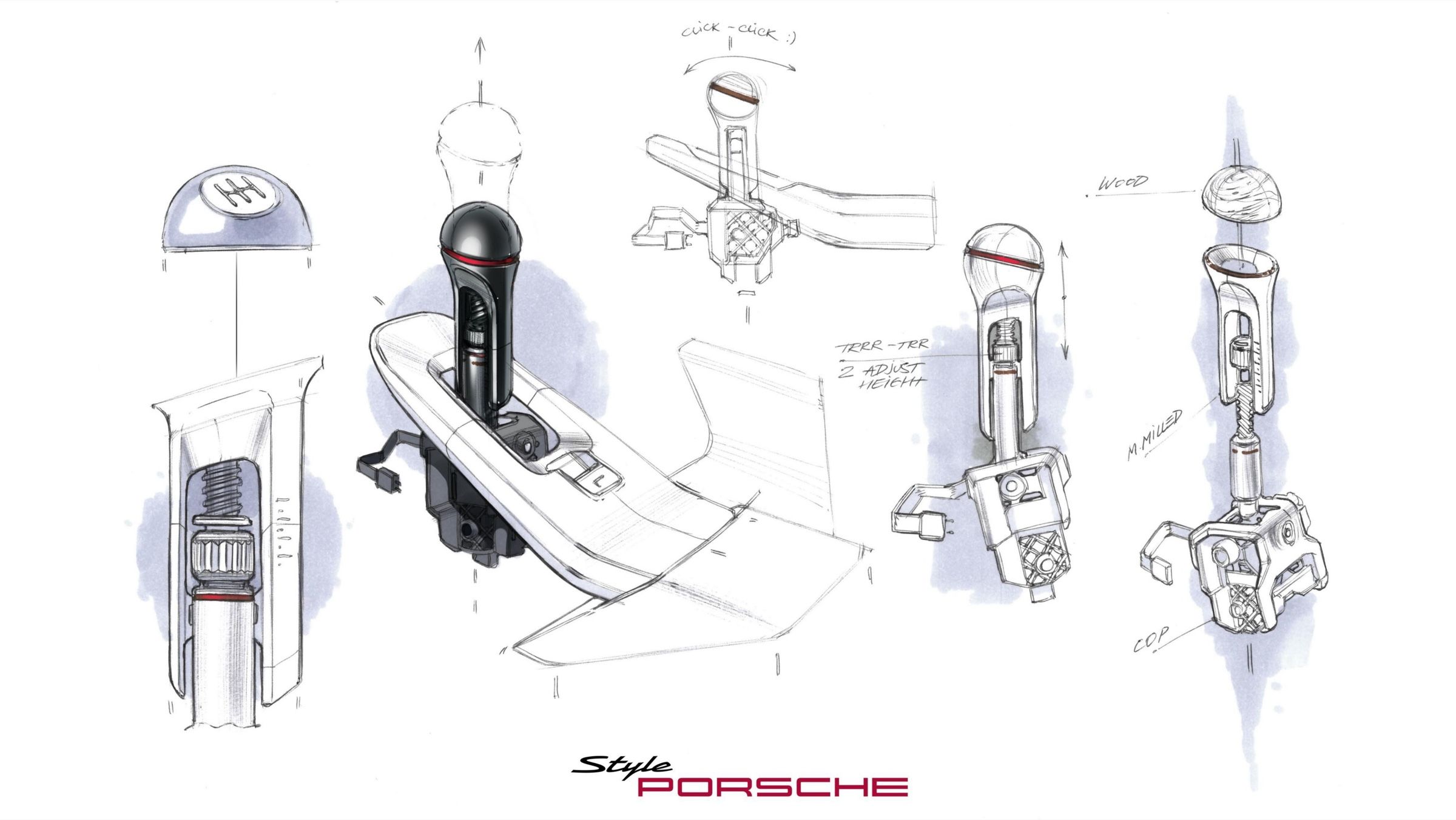
Sketch sheet of the gear lever and its gatePhoto: Porsche AG
Keep reading
- Porsche Mission S overviewWhat the car is, why Queens, and the quick answers.
- Specs: confirmed vs reportedEvery stated fact, and every rumor with its source.
- The seven design references911, G-model, GT1, 959, 917, 928 and 550 Spyder.
- All official photosThe full Porsche media package, in high resolution.
- Mission S vs Mission XThe 2023 electric hypercar study against the 2026 car.
- Porsche's mid-engine supercars550 Spyder, 904, GT1, Carrera GT, 918 Spyder, Mission S.
- Mission S timelineTeasers, the leak, the premiere and what came after.
Sources
- Porsche Mission S: the essence of the sports car reinterpreted, Porsche Newsroom, 2026-10-15. Every interior feature and quote on this page, and all images.
Spotted an error? Tell us and it goes on the corrections log.