Porsche flat-eight engines
Porsche's first flat-eight raced in 1962, and Porsche has never sold one in a road car. If the reports about the Mission S are right, that changes. Here is every car we found in Porsche's own archive that used one, and what a new one would and would not inherit.
By Mario Bailey. Published , updated .

The short answer
- Porsche's first flat-eight was the 1.5-liter Type 753 of the 804, which won the 1962 French Grand Prix: Porsche's only Formula One World Championship win as a manufacturer.
- Grown to two liters, it powered the 904, 906, 907, 909 and 910 racing cars; two-liter eights also ran in the 718. The 908 had its own three-liter flat-eight.
- The only road cars were two one-off 914s in 1969 with the 908 engine. Porsche has never sold a flat-eight road car.
- Porsche says flat engines allow particularly low designs and lower the center of gravity.
- A Mission S flat-eight is reported, not confirmed. Porsche has not named the engine.
Checked against Porsche's own releases on .
Every Porsche flat-eight, at a glance
Figures as Porsche gives them, in Porsche's units. "Not given" means no Porsche source we found states it.
| Car | Years | Engine | Output | Purpose |
|---|---|---|---|---|
| 804 | 1962 | Type 753, 1,494 cc | 132 kW (180 HP) | Formula One. Won the 1962 French Grand Prix. |
| 718 GTR and 718 W-RS | 1962 (GTR); 1961 to 1964 (W-RS) | Two-liter eight-cylinder | Not given | Sports-car racing and hill climbs. The single W-RS ran four- and eight-cylinder engines. |
| 904 Carrera GTS, eight-cylinder | 1964 | 1,982 cc | 178 kW (240 HP) | Works racing cars; three built. |
| 904/8 Bergspyder (also called 906-8) | 1965 | Flat-eight | 260 hp | Hill climbs; second in the 1965 Targa Florio. Five built, per a 2015 Porsche article. |
| 910/8 Bergspyder | 1967 | Fuel-injected flat-eight | 202 kW (275 PS) | Hill climbs. 1967 European Hill Climb Champion. |
| 907 | 1968 | Flat-eight (907/8); Porsche lists the 907 among the cars that used the two-liter engine | Not given | Endurance racing. Won Daytona, Sebring and the Targa Florio. |
| 909 Bergspyder | 1968 | Type 771, two-liter | 275 PS | Hill climbs; two built. Porsche's lightest racing car. |
| 908 (including 908/03) | From 1968 | 2,997 cc, air-cooled | About 340 hp, later 370 hp | Three-liter prototype racing. |
| 914 S, eight-cylinder ("914/8") | 1969 | 908 three-liter | About 300 PS (injection) and 260 PS (carburetors) | Two one-offs. One road-registered for Ferry Porsche. |
1962: the Formula One engine
The flat-eight began in Formula One. Porsche's first F1 project started in 1960, and Hans Mezger, later the designer of the 911 and 917 engines, worked on the 1.5-liter eight-cylinder Type 753 and the chassis of the 804 that carried it. Porsche's museum gives the engine 1,494 cc and 132 kW (180 HP) in a car weighing 461 kg. The engine was air-cooled, and the 804 was the first Porsche with disc brakes all round.
In July 1962 Dan Gurney won the French Grand Prix at Rouen in an 804. Porsche calls it "its only success as a vehicle manufacturer in the Formula 1 World Championship". A week later Gurney won the non-championship Solitude race near Stuttgart, with Joakim Bonnier second in the other 804. The engine outlived the car.

The two-liter years: 718 to 910
Porsche's Christophorus magazine sums it up: the 1.5-liter F1 eight "was developed into a two-liter engine that would become the most successful racing engine of its time", used in the 904, 906, 907, 909 and 910. The 718 family used a two-liter eight early on: the 718 GTR ran a two-liter eight in 1962, and the one-off 718 W-RS, which the mechanics called "Grandmother", used both four- and eight-cylinder engines from 1961 to 1964 and won the European Hill Climb Championship in 1963 and 1964.
Three 904s got the eight, a 1,982 cc engine with 178 kW (240 HP), against 106 four-cylinder cars; Edgar Barth and Umberto Maglioli won the prototype class at the 1964 Targa Florio in one. An open 904/8 Bergspyder finished second in the 1965 Targa. Then came the hill-climb specials. The 910/8 Bergspyder, with a fuel-injected eight of 202 kW (275 PS), took Gerhard Mitter to the 1967 European Hill Climb title. The 909 Bergspyder of 1968, with Porsche's Type 771 two-liter flat-eight and 275 PS, weighed about 400 kg and is still the lightest racing car Porsche has built. In endurance racing the 907/8 took a one-two-three at Daytona and won at Sebring in 1968, and Vic Elford and Umberto Maglioli won that year's Targa Florio in a short-tail 907.
The 908: three liters, and the road car that followed
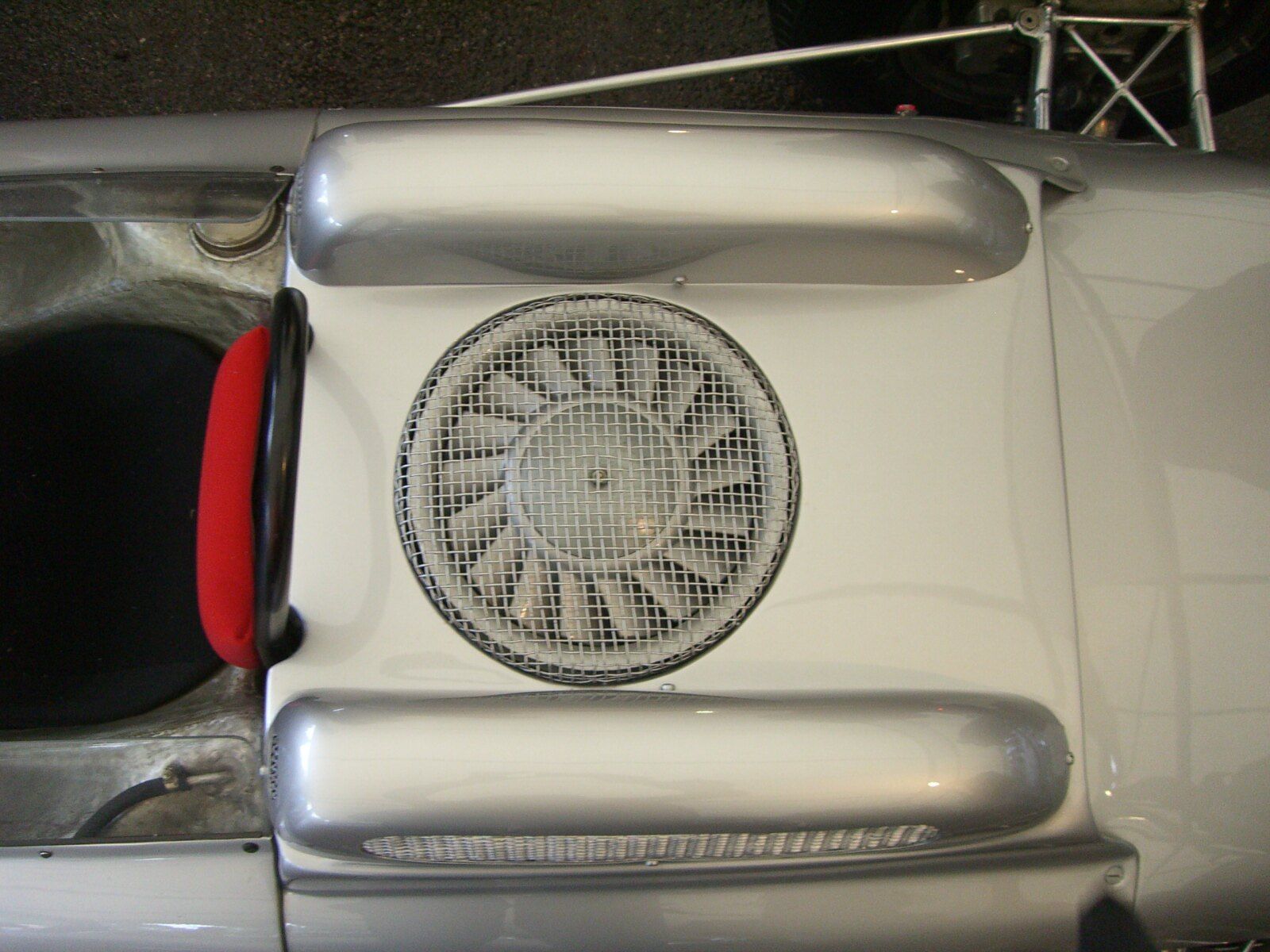
The 908 had its own engine, developed specifically for the three-liter prototype class from 1968. The air-cooled 2,997 cc eight made about 340 hp at first and later 370 hp, and Porsche got its weight down to about 180 kg with a titanium connecting rod, aluminum cylinders and heads and, from 1969, a magnesium crankcase. Early engines vibrated so badly the mechanics called them "the shaker" until the crankshaft was redesigned. In the 908/03 it won the Targa Florio and the Nürburgring 1,000 km in 1970 and the Nürburgring again in 1971.
In 1969 Porsche put the same engine in two 914s, ahead of the rear axle. The first, with fuel injection and about 300 PS, went to Ferdinand Piëch as a test car. The second, on carburetors with 260 PS, was road-registered and given to Ferry Porsche for his 60th birthday. Porsche's 2019 release calls them 914 S; they are widely known as the 914/8. Both could reach about 250 km/h. They are the only flat-eight Porsche road cars we found in Porsche's own archive.
Why a flat engine suits a mid-engined car
Porsche's own explanation of the flat engine is that it is light and flat, so "particularly low designs are possible as the cylinders are lying flat. This lowers the centre of gravity." In a 911 that low mass sits behind the rear axle. In a mid-engined car it sits between the axles, the layout of the sports racing and hill-climb cars on this page.
The flat-eight cars also taught Porsche how far to push it. The 909 moved the seat, engine and gearbox forward and put the differential at the very back; Porsche says that weight distribution, first tried on the 909, "helped make the later 908/3 almost unbeatable on twisty, demanding tracks". On the 908/03 the split was 45:55 front to rear. For more on the trade-offs, see why mid-engine.
What a Mission S flat-eight would inherit
Porsche has confirmed only that the Mission S engine sits in the middle of the car. The flat-eight comes from press reports: first Handelsblatt, via Jalopnik, on 21 September 2026; then Motor.es, which said on 16 October that the production car is expected to have eight cylinders as either a V8 or a flat-eight. CEO Michael Leiters has said only that the platform can take "pure ICE, hybrid and also plug-in hybrid". The engine page traces every claim.
If it is a flat-eight, it would inherit a name and a principle, not hardware. Every engine on this page was air-cooled, and the newest is more than half a century old. Porsche's own V8 history says its earlier eight-cylinder flat engines "were air-cooled and only used in race cars". What carries over is the reason Porsche built them: a low, light engine between the axles. It would also be the first series-production Porsche road car with a flat-eight. Until Porsche names the engine, treat it as a report. For the full line of Porsche's mid-engined flagships, see the history hub; for the 908's contemporary, seethe 917.
Quick answers
Has Porsche ever sold a flat-eight road car?
No. Every Porsche flat-eight was built for racing, apart from two one-off 914s in 1969, one of which was road-registered and given to Ferry Porsche. Porsche's first eight-cylinder production engine was the water-cooled V8 of the 1977 928.
What was Porsche's first flat-eight?
The 1.5-liter Type 753, built for the 804 Formula One car of 1962. Porsche then developed it into a two-liter engine used in its sports racing and hill-climb cars.
Does the Mission S have a flat-eight?
Unconfirmed. Jalopnik, citing the German newspaper Handelsblatt, reported a flat-eight on 21 September 2026, but Porsche has not named the Mission S engine. Its CEO has said only that the platform can take combustion, hybrid or plug-in hybrid power.
Notes on the numbers
- The 1965 hill-climb car: Porsche's 2020 Australian story calls it the 904/8 Bergspyder; a 2015 Porsche article calls the same kind of car the 906-8 Bergspyder, built on the 904 chassis, with 260 hp, 570 kg and five made.
- 909 Bergspyder: about 400 kg in Porsche's 2026 article, "just under 384 kilos, including fuel" in 2019. Porsche gives 0 to 100 km/h in 2.5 seconds (2026) and 2.4 seconds (2023).
- Type numbers: Porsche names the 804 engine Type 753 and the 909 engine Type 771. It calls the 908's engine the "908 engine". We found no Porsche source naming a type for the other two-liter engines.
- "Only used in race cars": Porsche's 2016 V8 history says this of its flat-eights; its 2019 914 release describes the road-registered 914 for Ferry Porsche. Both are Porsche's words.
- 718 and 907 output: the Porsche pages we read give no output figure for the eight-cylinder 718s or the 907, so the table says "Not given".
Keep reading
- Porsche's mid-engine supercars550 Spyder, 904, GT1, Carrera GT, 918 Spyder, Mission S.
- Porsche 356The first Porsche, and the interior idea the Mission S borrows.
- Porsche 550 SpyderThe first Porsche super sports car, and the 1953 Queens pier photo.
- Porsche 904 Carrera GTSA mid-engined road and race car with a plastic body.
- Porsche 917The Le Mans winner and its cooling-air fan.
- Porsche 911 G-modelThe impact-bumper 911 and the shut lines the Mission S quotes.
- Porsche 928The front-engined V8 Porsche and its phone-dial wheels.
- Porsche 959The 1980s technology flagship and its roofline.
- Porsche 911 GT1The Le Mans car with a road version and a mid-mounted flat-six.
- Porsche Carrera GTThe V10 with a manual gearbox, 1,270 built.
- Porsche 918 SpyderThe plug-in hybrid hypercar, 918 built.
- Porsche Mission S overviewWhat the car is, why Queens, and the quick answers.
- Every Porsche Mission conceptMission E, E Cross Turismo, R, X and S, and what each one led to.
Sources
- Porsche Typ 804 (Porsche Museum press kit), Porsche Newsroom, undated. 804 engine, 1,494 cc, 132 kW (180 HP), 461 kg, disc brakes, Rouen and Solitude.
- Porsche mourns the death of Dan Gurney, Porsche Newsroom, 2018-01-15. The 804 win as Porsche's only F1 World Championship success as a manufacturer.
- Porsche mourns the death of Hans Mezger, Porsche Newsroom, 2020-06-11. Mezger and the 1.5-liter Type 753 for the 804; F1 project from 1960.
- Air-cooled legends, Porsche Newsroom, 2018-03-08. The air-cooled 804, Solitude one-two with Bonnier.
- Right-sizing, Porsche Christophorus, 2016-09-08. The F1 eight grown to two liters for the 904, 906, 907, 909 and 910.
- Time travel: The Porsche 718, Porsche Newsroom, 2016-06-04. 718 GTR and 718 W-RS eight-cylinder engines, hill-climb titles.
- Porsche 904 Carrera GTS (Porsche Museum press kit), Porsche Newsroom, undated. 904 eight-cylinder: 1,982 cc, 178 kW (240 HP), three built, 1964 Targa class win.
- How Hamilton brought Porsche to Australia, Porsche Newsroom, 2020-12-08. 904/8 Bergspyder second in the 1965 Targa Florio.
- Porsche for Dummies, Part 3, Porsche Newsroom, 2015-03-20. 906-8 Bergspyder: 260 hp, 570 kg, five built.
- The Porsche Museum is preserving the 910/8 Bergspyder, Porsche Newsroom, 2019-05-03. 910/8 Bergspyder: 202 kW (275 PS), 1967 title.
- 75 years of Porsche sports cars: the greatest motorsport triumphs, Porsche Newsroom, 2023-06-05. 907/8 at Daytona and Sebring, 1968.
- Porsche mourns the death of Vic Elford, Porsche Newsroom, 2022-03-14. Elford and Maglioli, overall winners of the 1968 Targa Florio in a 907 short-tail.
- A history of the Porsche Spyder name, Porsche, 2023-09-15. 909 Type 771 flat-eight, two built.
- Icon: The Spherical Fuel Tank of the Porsche 909 Bergspyder, Porsche Newsroom, 2026-08-25. 909 weight, 275 PS, weight distribution and the 908/3.
- Mountain festival, Porsche Newsroom, 2019-06-07. 909 weight including fuel.
- The essence of Porsche, Porsche Newsroom, 2017-06-25. 908 engine, output, weight, "the shaker", 908/03 wins and weight split.
- The Porsche Museum celebrates the mid-engined sports car: 50 Years of the Porsche 914, Porsche AG press release (PDF), 2019-05-20. The two eight-cylinder 914 S cars.
- The eight-cylinder V-engines from Porsche, Porsche Newsroom, 2016-07-12. Earlier eight-cylinder flat engines "only used in race cars"; 928 V8 from 1977.
- The flat engine tradition, Porsche Newsroom USA, 2018-03-07. Flat engines and the low center of gravity.
- Porsche Mission S: the essence of the sports car reinterpreted, Porsche Newsroom, 2026-10-15. Mission S mid-engined layout; no engine named.
- Porsche Mission S supercar reveals brand's future look and plan to challenge Ferrari, Auto Express (Phil McNamara), first published 2026-10-07 and updated, 2026-10-16. Leiters on combustion, hybrid and plug-in hybrid.
- Forget a Nuvolari rebadge, Porsche is now planning a halo supercar with a flat-8, Jalopnik (Andy Kalmowitz), citing Handelsblatt, 2026-09-21. First flat-eight report, citing Handelsblatt.
- «No hay demanda»: el CEO de Porsche descarta un Mission S totalmente eléctrico, Motor.es (David Durán), 2026-10-16. Eight cylinders, as a V8 or a flat-eight.
Spotted an error? Tell us and it goes on the corrections log.